Semaglutide is the most clinically validated weight loss drug currently available — and it's not particularly close. In the STEP 1 trial, patients on the 2.4 mg weekly dose lost an average of 14.9% of their body weight over 68 weeks.[1] That's a number that, before this drug class, was only achievable with bariatric surgery.
It's a 31-amino acid GLP-1 receptor agonist, meaning it mimics glucagon-like peptide-1 (GLP-1), a hormone your gut releases after you eat. Semaglutide was engineered specifically for once-weekly dosing — a structural modification over its predecessor liraglutide that dramatically extended its half-life by increasing albumin binding affinity and protecting it from enzymatic degradation.[2] That weekly dosing schedule is one reason adherence is so much better than older daily injectables.
Three branded formulations exist: Ozempic (subcutaneous injection, approved for type 2 diabetes), Wegovy (subcutaneous injection, approved for chronic weight management at a higher 2.4 mg dose), and Rybelsus (oral tablet, approved for type 2 diabetes). Same molecule, different doses and delivery systems, different approved indications.
Key Takeaways
Semaglutide is FDA-approved for both type 2 diabetes (Ozempic, Rybelsus) and chronic weight management (Wegovy) — one of the few drugs with major approvals in both categories.
The STEP 1 trial showed 14.9% average body weight reduction at 2.4 mg over 68 weeks — the strongest weight loss data for any approved medication at the time of its approval.
Semaglutide works by activating GLP-1 receptors in the brain and gut, suppressing appetite and slowing gastric emptying.
Nausea during dose escalation is the most commonly reported side effect; it typically improves once you reach a stable maintenance dose.
Compounding access has narrowed significantly since FDA removed semaglutide from the drug shortage list in early 2025 — branded formulations are the primary legal access pathway now.
0.25 mg weekly (starting) → 0.5–1 mg weekly (maintenance); up to 2 mg weekly
Half-life
~7 days
Primary Uses
Chronic weight management, type 2 diabetes
Dosing — What the Trials Used
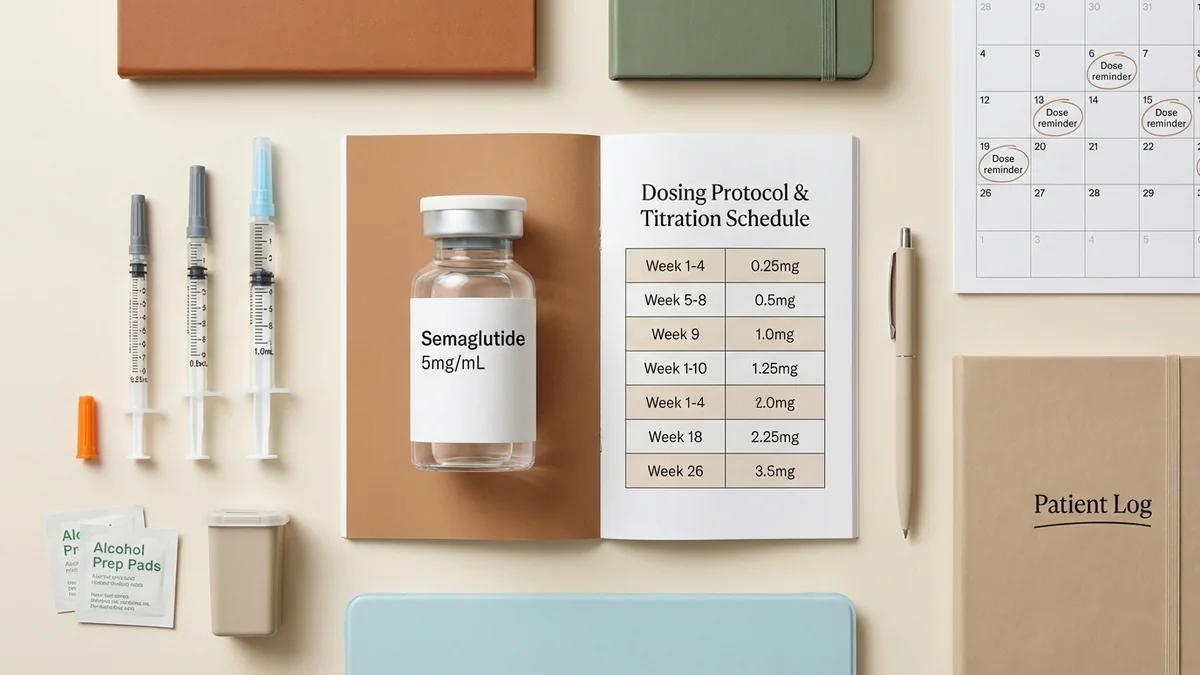
The escalation protocol exists for one reason: nausea. Your GI tract needs time to adapt to GLP-1 receptor activation. Starting at the maintenance dose would make most people miserable for weeks. The standard Wegovy escalation looks like this:
Wegovy Escalation Schedule — Approved Protocol
Period
Dose
Duration
Purpose
Weeks 1–4
0.25 mg weekly
4 weeks
Tolerability — not a therapeutic dose
Weeks 5–8
0.5 mg weekly
4 weeks
Continued escalation
Weeks 9–12
1.0 mg weekly
4 weeks
Approaching therapeutic range
Weeks 13–16
1.7 mg weekly
4 weeks
Near-maintenance
Week 17+
2.4 mg weekly
Maintenance
Full therapeutic dose
If you can't tolerate a dose increase, staying at the previous dose for an extra four weeks is standard practice — the escalation schedule is a guideline, not a hard rule. Some patients take six months to reach 2.4 mg. That's fine.
The STEP 1 trial used this 2.4 mg maintenance dose and ran for 68 weeks in adults with a BMI (body mass index) of 30 or higher, or 27+ with at least one weight-related condition.[1]
14.9%average body weight reduction at 2.4 mg over 68 weeks — STEP 1 trial (N=1,961)
For type 2 diabetes management with Ozempic, the typical maintenance dose is 0.5 mg to 1 mg weekly, with a 2 mg dose available for patients who need additional glycemic control. The SUSTAIN trial program (Semaglutide Unabated Sustainability in Treatment of Type 2 Diabetes) established the efficacy and safety profile across this dose range.[3]
What Makes Semaglutide Different
Before semaglutide, weight loss drugs were measured in single-digit percentages. Orlistat produced around 3% placebo-adjusted weight loss. Phentermine-topiramate did better, but came with significant neuropsychiatric side effects and a contraindication in pregnancy. The bar was low.
Semaglutide cleared it by a wide margin. 14.9% average weight loss in STEP 1 means roughly one in three patients lost more than 20% of their body weight.[1] That's not a modest metabolic nudge — that's a meaningful shift in disease trajectory for someone with obesity-related hypertension, sleep apnea, or pre-diabetes.
The cardiovascular data matters here
The SELECT trial (Semaglutide Effects on Cardiovascular Outcomes in People with Overweight or Obesity) demonstrated that 2.4 mg weekly semaglutide reduced major adverse cardiovascular events by 20% in people with established cardiovascular disease and overweight or obesity — without diabetes as an entry criterion. This was the first weight loss drug to show a cardiovascular mortality benefit in a dedicated outcomes trial.
The other differentiator is the oral formulation. Rybelsus (14 mg oral) was the first oral GLP-1 agonist approved anywhere in the world. It's less effective than the injectable for weight loss — partly bioavailability, partly the lower approved dose — but for patients who can't or won't inject, it's a real option for glycemic control.
How Does Semaglutide Work?
The starting point is GLP-1 itself. Your gut releases GLP-1 within minutes of eating, and it does several things at once: it tells your pancreas to release insulin (but only when blood glucose is elevated, which is why it doesn't cause hypoglycemia in non-diabetics), it signals the brain's hypothalamus to reduce appetite, and it slows the rate at which your stomach empties into the small intestine.
The problem with natural GLP-1 is that it has a half-life of about two minutes. Enzymes called DPP-4 break it down almost immediately. Semaglutide was engineered to solve exactly this problem.
The structural modifications that make semaglutide work as a once-weekly drug are specific: a substitution at position 8 of the peptide chain (replacing alanine with 2-aminoisobutyric acid) blocks DPP-4 from degrading it, and a C-18 fatty diacid chain attached via a linker to lysine at position 26 gives it extremely high albumin binding affinity.[2] When semaglutide circulates in your blood, it's mostly bound to albumin — a large plasma protein that can't be filtered by the kidneys or rapidly cleared. That binding is what stretches a 2-minute half-life into ~7 days.
Once bound to GLP-1 receptors (GLP-1R), semaglutide activates pathways in the hypothalamus and brainstem that reduce hunger and increase satiety signals. This isn't just peripheral — there's meaningful CNS activity. Patients often describe not just feeling full faster, but genuinely caring less about food. The "food noise" reduction is something a lot of patients mention unprompted, and there's growing mechanistic evidence for why: GLP-1 receptors in the reward and motivation circuits of the brain appear to modulate dopaminergic responses to food cues.[3]
What the Clinical Evidence Actually Shows
Weight Management — The STEP Trials
The STEP program (Semaglutide Treatment Effect in People with Obesity) was a series of Phase 3 trials that established the weight loss profile of 2.4 mg weekly semaglutide.
STEP 1 enrolled 1,961 adults with obesity or overweight plus a weight-related condition, randomized to 2.4 mg semaglutide or placebo over 68 weeks.[1] The 14.9% mean weight loss in the semaglutide group versus 2.4% in the placebo group is the headline number — but the distribution matters too. About 86% of semaglutide-treated patients lost at least 5% of body weight, and roughly 32% lost more than 20%.[1] That spread tells you this isn't a drug that produces modest uniform results; some patients respond dramatically.
Type 2 Diabetes — The SUSTAIN Trials
The SUSTAIN trial program evaluated semaglutide across multiple comparators in type 2 diabetes management. SUSTAIN-6, the cardiovascular outcomes trial, randomized 3,297 patients with type 2 diabetes and high cardiovascular risk to semaglutide versus placebo over 104 weeks.[3] The primary cardiovascular endpoint (major adverse cardiac events — heart attack, stroke, or cardiovascular death) was reduced by 26% in the semaglutide group.[3] HbA1c (a 90-day average of blood glucose levels) dropped by 1.1 percentage points at 0.5 mg and 1.4 percentage points at 1.0 mg — clinically meaningful reductions for patients with type 2 diabetes.[3]
Head-to-Head: Semaglutide vs. Tirzepatide
A 2024 real-world analysis published in JAMA Internal Medicine compared semaglutide and tirzepatide in adults with overweight or obesity — the first large head-to-head comparison in a non-diabetic population.[4] Tirzepatide produced greater weight loss at 12 months (approximately 15.3% vs. 8.3% for semaglutide in that dataset).[4] This isn't a randomized controlled trial, so confounders exist — but the direction of the finding aligns with the Phase 3 randomized trial data, where tirzepatide's 22.5% weight loss in SURMOUNT-1 exceeded semaglutide's STEP 1 results.[4]
That said, semaglutide has a longer track record, more cardiovascular outcomes data, and broader insurance coverage in most markets. The "best" drug depends on your starting point, your goals, and what your insurance will actually cover.
What the Evidence Does Not Show
Long-term weight maintenance after stopping — Weight regain after discontinuation is substantial. A 2022 withdrawal study showed participants regained approximately two-thirds of their lost weight within one year of stopping semaglutide. This drug appears to require ongoing use to maintain its effects, which has real implications for cost and access planning.
Direct head-to-head RCT data against tirzepatide for weight loss — The JAMA Internal Medicine 2024 analysis was observational, not randomized.[4] A proper head-to-head RCT hasn't been completed. Cross-trial comparisons are imprecise.
Efficacy in patients without obesity — Most trial data is in patients with BMI ≥ 27 or ≥ 30. Using semaglutide for cosmetic weight loss in people with healthy BMIs is off-label and has no RCT support.
Long-term safety beyond ~5 years — The longest trials run approximately 2 years. We don't have a 10-year safety dataset. The theoretical thyroid C-cell tumor risk (observed in rodents at high doses) has not been demonstrated in humans, but the observation period is still relatively short.[3]
Muscle mass preservation — GLP-1 agonists produce weight loss that includes lean mass loss, not just fat. The proportion varies by diet and exercise habits. There's no strong RCT evidence that semaglutide preserves lean mass better than other caloric-restriction approaches.
Side Effects — What to Actually Expect
During dose escalation (weeks 1–16 or so):
Nausea — the most common complaint, reported by a meaningful proportion of patients in clinical trials.[3] It's worst in the 24–48 hours after each injection and typically improves as your body adapts. Eating smaller meals, avoiding high-fat foods around injection day, and staying hydrated all help.
Vomiting — less common than nausea, but reported. If you're vomiting after every dose increase, that's a signal to hold the current dose longer before escalating.
Diarrhea — tends to appear early in treatment and often resolves within a few weeks.
At stable dose:
Constipation — more common at higher doses and later in treatment. The slowing of gastric motility that makes you feel full longer also slows the whole GI tract. Adequate fiber and hydration help significantly.
Injection site reactions — mild redness or tenderness at the injection site; rotate between the abdomen, thigh, and upper arm to reduce this.
Fatigue — reported by some patients, particularly during escalation. Usually transient.
Rare but worth knowing:
Pancreatitis — a class-level concern for all GLP-1 agonists. The absolute risk appears low based on trial data, but if you develop severe, persistent abdominal pain, stop the medication and seek evaluation promptly.[3]
Thyroid C-cell tumors — observed in rodent studies at high doses; not demonstrated in human trials to date, but semaglutide carries a black-box warning and is contraindicated in patients with a personal or family history of medullary thyroid carcinoma or Multiple Endocrine Neoplasia syndrome type 2.[3]
Gastroparesis — severe gastric motility slowing has been reported, particularly at higher doses. This is distinct from the normal mild slowing and warrants medical evaluation.
If you experience severe abdominal pain, persistent vomiting that prevents you from keeping down food or water, or signs of an allergic reaction (rash, difficulty breathing, swelling), contact your prescribing provider the same day — don't wait for your next scheduled appointment.
Regulatory & Access Status
FDA approval status — as of 2026-03
Semaglutide is FDA-approved under three brand names: Ozempic (subcutaneous injection, 0.5 mg, 1 mg, 2 mg — type 2 diabetes), Wegovy (subcutaneous injection, 2.4 mg — chronic weight management in adults and adolescents 12+), and Rybelsus (oral tablet, 7 mg and 14 mg — type 2 diabetes). All three require a valid prescription from a licensed US healthcare provider.
Compounding status has changed significantly
During the 2022–2024 period when Ozempic and Wegovy were on the FDA drug shortage list, licensed 503A and 503B compounding pharmacies could legally produce semaglutide copies. In early 2025, FDA removed semaglutide from the shortage list. This triggered a wind-down period for compounders, and by mid-2025 the FDA had moved to restrict most compounding of commercially available semaglutide formulations. If you're currently receiving compounded semaglutide, verify your pharmacy's current legal status with your prescribing provider. Access through compounders is no longer broadly available the way it was in 2023–2024.
For most patients, the practical access pathway is: get a prescription from a licensed provider (primary care physician, endocrinologist, obesity medicine specialist, or a telehealth platform that prescribes weight loss medications), fill it at a retail or specialty pharmacy, and navigate insurance coverage. Prior authorization requirements are common for Wegovy; Ozempic is more frequently covered for patients with a type 2 diabetes diagnosis.
If you're looking for a clinic that prescribes semaglutide, the MyPeptideMatch clinic finder lets you filter by treatment category and location.
FAQ
How long does it take to see results with semaglutide?
Most patients start noticing reduced appetite within the first 2–4 weeks, even at the low starting dose of 0.25 mg. Meaningful weight loss — enough to see on the scale — typically becomes apparent around weeks 8–12, once you're approaching therapeutic doses. The full 14.9% average weight loss seen in STEP 1 accumulated over 68 weeks, so this is a long-game treatment, not a rapid result.[1]
What's the difference between Ozempic and Wegovy?
Same molecule, different approved doses and indications. Ozempic is approved for type 2 diabetes at doses up to 2 mg weekly. Wegovy is approved specifically for chronic weight management at 2.4 mg weekly. The 2.4 mg dose is what produced the STEP 1 weight loss data — Ozempic's lower doses produce less weight loss on average. Using Ozempic off-label for weight loss at the 2 mg dose is common in practice, but Wegovy is the on-label option for that indication.
Does semaglutide work if you don't have diabetes?
Yes — and this is actually what the STEP 1 trial tested. The majority of STEP 1 participants did not have type 2 diabetes; they had obesity or overweight with conditions like hypertension, high cholesterol, or sleep apnea.[1] The weight loss mechanism (appetite suppression, reduced food intake) operates independently of blood glucose status.
Can you take semaglutide long-term?
The current clinical guidance treats obesity as a chronic condition requiring ongoing management, and the drug's label reflects that framing. The STEP trials ran up to 68 weeks. Longer-term safety data is accumulating — the SELECT cardiovascular outcomes trial ran ~33 months — but we don't have a decade of post-market data yet.[3] Most obesity medicine specialists treat this as a medication patients may need to continue indefinitely, similar to antihypertensives, rather than a finite course.
How does semaglutide compare to tirzepatide?Tirzepatide targets both GLP-1 and GIP (glucose-dependent insulinotropic polypeptide) receptors, while semaglutide targets GLP-1 only. In the SURPASS-2 trial, tirzepatide at 15 mg produced greater HbA1c and weight reductions than semaglutide 1 mg in type 2 diabetes patients.[5] For weight loss specifically, tirzepatide's SURMOUNT-1 data (22.5% weight loss) outperforms STEP 1 semaglutide data (14.9%), though these are separate trials, not a head-to-head comparison. See our semaglutide vs. tirzepatide comparison for a detailed breakdown.
Related Peptides & Comparisons
If you're evaluating semaglutide, the two most relevant comparisons are tirzepatide (Mounjaro/Zepbound) and liraglutide (Victoza/Saxenda). Liraglutide is semaglutide's predecessor — a once-daily GLP-1 agonist that produces roughly 5–8% weight loss, meaningfully less than semaglutide's 14.9% at the weight management dose. Tirzepatide adds GIP receptor agonism to the GLP-1 mechanism and has produced stronger weight loss numbers in trials, at the cost of being newer with less long-term safety and cardiovascular outcomes data.
For patients interested in where the GLP-1 class is heading, retatrutide is a triple agonist (GLP-1 + GIP + glucagon) currently in Phase 3 trials with Phase 2 data showing up to 24.2% weight loss — but it has no FDA approval and no commercial access yet.
GLP-1 Class Comparison: Semaglutide vs. Tirzepatide vs. Liraglutide
Parameter
Semaglutide
Tirzepatide
Liraglutide
Receptors targeted
GLP-1
GLP-1 + GIP
GLP-1
Max weight loss (trial)
14.9% (68 wk, STEP 1)
22.5% (72 wk, SURMOUNT-1)
~8% (56 wk)
Dosing frequency
Once weekly
Once weekly
Once daily
FDA approved for weight loss
Yes (Wegovy)
Yes (Zepbound)
Yes (Saxenda)
CV outcomes trial
Yes (SELECT, SUSTAIN-6)
Ongoing
Yes (LEADER)
Oral formulation
Yes (Rybelsus)
No
No
References
Wilding JPH, et al. "Once-Weekly Semaglutide in Adults with Overweight or Obesity." STEP 1 Trial (NCT03548935). N Engl J Med. 2021;384(11):989-1002. PMID: 33567185
Lau J, et al. "Discovery of the Once-Weekly Glucagon-Like Peptide-1 (GLP-1) Analogue Semaglutide." J Med Chem. 2015;58(18):7370-7380. PMID: 26308095
Blonde L, et al. "Safety of Semaglutide." Front Endocrinol. 2021;12:645563. PMID: 34305810
Comparison of semaglutide vs tirzepatide for weight loss in adults with overweight or obesity. JAMA Intern Med. 2024. PMID: 38976257
Frías JP, et al. "Tirzepatide versus Semaglutide Once Weekly in Patients with Type 2 Diabetes." SURPASS-2 Trial. N Engl J Med. 2021;385(6):503-515. PMID: 34170647
Ghusn W, et al. "Wegovy (semaglutide): a new weight loss drug for chronic weight management." J Investig Med. 2022;70(1):5-13. PMID: 34706925
This content is for informational purposes only and does not constitute medical advice. Consult a licensed healthcare provider before starting any treatment.
Where to Buy Semaglutide for Research
Research Use Only — not intended for human consumption
MyPeptideMatch.com does not provide medical advice. Always consult a qualified healthcare provider before starting any peptide therapy. Regulatory status may change.
 MyPeptideMatch