BPC-157: Uses, Benefits, FDA Status & Clinics | MyPeptideMatch.com
BPC-157
Category 2 (Prohibited)
Synthetic Fragment
Tissue RepairRecovery
Last reviewed 03-2026·MyPeptideMatch Team
What Is BPC-157?
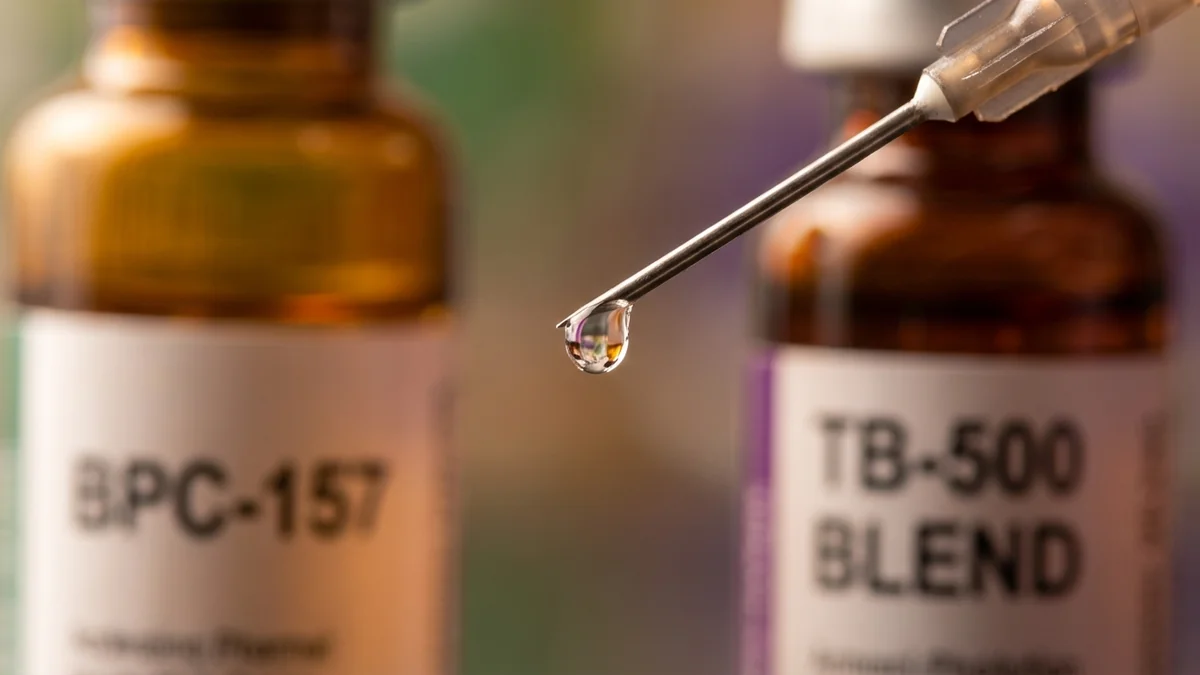
BPC-157 is a 15-amino-acid synthetic peptide derived from a protein sequence found in human gastric juice. Its full name — Body Protection Compound — comes from that origin. Researchers have been studying it since the early 1990s, and the preclinical data on tissue repair, tendon healing, and gut protection is genuinely interesting. The problem is that almost all of it comes from rodent studies. No completed, peer-reviewed human clinical trial has been published.
That gap between preclinical promise and clinical evidence matters a lot, because the FDA has placed BPC-157 in its Category 2 prohibited category, barring compounding pharmacies from including it in any preparation. If you've seen it offered by a telehealth clinic or peptide vendor in the US, that's not a legal gray area — it's a violation of current FDA policy.
Here's what you'll find on this page: an honest breakdown of what the animal research actually shows, what we genuinely don't know about human use, and what the regulatory situation means for you practically.
Key Takeaways
BPC-157 is a synthetic 15-amino-acid peptide with significant preclinical evidence for tissue repair and gut healing — but no completed human clinical trials.
The FDA has classified it as a Category 2 prohibited substance, meaning it cannot be legally compounded or prescribed in the United States.
Animal studies show accelerated tendon healing, improved gut mucosal recovery, and possible CNS effects, but translating rodent data to humans is never straightforward.
Human safety data is essentially absent — side effect profiles come from animal studies and anecdotal reports, not controlled trials.
WADA temporarily banned it in 2022 and later removed it from the prohibited list; athletes should verify current status directly with WADA before any use.
Class
Synthetic Peptide Fragment
Amino Acids
15 (pentadecapeptide)
Origin
Partial sequence isolated from human gastric juice
FDA Status
Category 2 Prohibited — no legal compounding or prescribing pathway in the US
Administration
Subcutaneous injection (most common in research); oral studied in animal models
Typical Dose (Practitioner-Reported)
Not established in human clinical trials; dosing derived from animal studies and practitioner reports only
Half-life
Not established in humans — practitioner-reported, not confirmed in published clinical trials
Primary Research Areas
Tendon & ligament repair, gut mucosal healing, musculoskeletal recovery
WADA Status
Not currently listed as prohibited (was temporarily added in 2022)
Legal status in the United States — read this first
The FDA has classified BPC-157 as a Category 2 bulk drug substance, meaning it is prohibited from use in compounded medications. No licensed US compounding pharmacy can legally include it in a preparation. No telehealth provider can legally prescribe it. If you're being offered BPC-157 through a US-based clinic or pharmacy, that provider is operating outside current FDA regulations. Access in the US currently means obtaining it from unregulated sources — with all the quality and safety risks that entails.
What Makes BPC-157 Different From Other Recovery Peptides?
Most peptides used for tissue repair target a single pathway — growth hormone secretagogues push IGF-1, for example, or TB-500 (thymosin beta-4) works primarily through actin regulation. BPC-157 appears to work through several mechanisms simultaneously, which is part of why it's generated so much research interest.[1]
The other thing that makes it unusual is its source. It's not a synthetic molecule designed from scratch — it's derived from a protein naturally present in human gastric juice, which researchers believe contributes to the stomach's remarkable ability to resist its own acid and heal rapidly from injury.[1] That origin story is part of why early researchers thought it might have systemic protective properties beyond just the gut.
What the preclinical research has actually tested
Animal studies on BPC-157 have covered a wide range of applications: Achilles tendon transection, rotator cuff injuries, ligament tears, inflammatory bowel disease models, bone healing, and even neurological injury models. The breadth of that preclinical work is genuinely unusual for a peptide that has never completed a human trial.
How Does BPC-157 Work?
The honest answer is that the complete mechanism isn't fully established, even after decades of animal research. What the literature describes is a peptide that appears to influence multiple overlapping repair pathways rather than hitting one target cleanly.[1]
The most well-documented effect involves tendon and connective tissue healing. A 2011 study in the Journal of Applied Physiology showed that BPC-157 significantly accelerated outgrowth of tendon fibroblasts from explant cultures, enhanced cell survival under stress conditions, and promoted cell migration — three of the key cellular processes required for tendon repair after injury.[2] The researchers found that BPC-157 appeared to activate the FAK-paxillin pathway, which plays a role in how cells sense and respond to their mechanical environment. That's a specific, plausible mechanism — not just "it helps healing" as a black box.
On the gut side, the connection to gastric juice origin matters. BPC-157 has been shown in animal models to protect the gastric mucosa and accelerate healing of intestinal wounds, likely through effects on nitric oxide signaling and angiogenesis (the formation of new blood vessels).[1] Angiogenesis is central to wound healing everywhere in the body, not just the gut — new blood vessel formation delivers oxygen and nutrients to damaged tissue. That's probably why researchers see effects across such varied tissue types.
The CNS effects reported in some animal models are less well-characterized mechanistically. They exist in the literature, but the pathway from peptide to neurological outcome is not clearly mapped.[1]
What the Clinical Evidence Actually Shows
This is where you need to be clear-eyed. The preclinical evidence for BPC-157 is genuinely extensive — there are hundreds of animal studies spanning multiple tissue types and injury models, and the pattern of results is consistent enough to be interesting.[1][2][3] A 2019 review in Cell and Tissue Research specifically focused on musculoskeletal soft tissue healing and found that BPC-157 consistently accelerated healing in rodent models of tendon, ligament, and muscle injury.[2]
A 2021 case series published in Alternative Therapies in Health and Medicine described intra-articular injection of BPC-157 combined with thymosin beta-4 for various types of knee pain, including osteoarthritis and tendinosis.[4] This is the closest thing to human clinical data currently available — and it's a case series, not a controlled trial. Case series can't establish causation, can't control for placebo effect, and can't tell you what dose is actually doing the work. They're hypothesis-generating, not evidence of efficacy.
A 2025 review in Pharmaceuticals summarized the full body of BPC-157 literature and patents, describing it as having "pleiotropic beneficial effects" across preclinical models — while also noting that its path to clinical translation remains incomplete.[1]
The consistent finding across the animal literature is that BPC-157 accelerates healing timelines and reduces the severity of injury-induced damage. Whether that translates to humans at any particular dose is genuinely unknown.
What We Don't Know Yet
Human efficacy data — Every efficacy claim for BPC-157 comes from animal models or case reports. No randomized controlled trial in humans has been completed and published. The gap between rodent pharmacology and human outcomes is real and often humbling.
Optimal dose in humans — Animal studies use weight-based dosing in controlled conditions. The practitioner-reported ranges circulating online (200–500 mcg/day) are not derived from any clinical trial. Nobody knows what the right human dose is.
Long-term safety — Animal studies report a favorable short-term safety profile, but long-term human data doesn't exist. "Few side effects in rodents over 4 weeks" is not a safety clearance for years of human use.
Oral vs. injectable bioavailability in humans — Some animal studies used oral administration with apparent effect, which would make BPC-157 unusual among peptides. Whether oral bioavailability holds in humans is practitioner-reported, not confirmed in published clinical trials.
Mechanism clarity — The multi-pathway activity is interesting but also means the mechanism isn't cleanly understood. Drugs with poorly characterized mechanisms carry more uncertainty about off-target effects.
Interaction with existing conditions — No data exists on how BPC-157 interacts with common medications, autoimmune conditions, or cancer history. Angiogenic peptides in particular warrant caution in anyone with a history of malignancy.
Side Effects — What to Actually Expect
What animal studies report:
Minimal systemic toxicity — Rodent studies consistently report few adverse effects at therapeutic doses, which is part of why BPC-157 attracted research interest.[1] This is real data, but it's animal data.
Injection site reactions — Mild local reactions at the injection site are the most commonly reported finding in animal models and anecdotal human reports.
What anecdotal human reports describe (not clinical trial data):
Nausea and dizziness — Reported by some users, particularly at higher doses. Frequency and severity are unknown because no controlled trial has measured them.
Vivid dreams — Anecdotally reported; no mechanistic explanation established.
Transient fatigue — Reported in some accounts, particularly early in use.
The honest framing here: we don't have a real side effect profile for humans. What you'll find online is a mix of animal study findings and community self-reporting, and those are very different types of data. If you're considering BPC-157 and have a history of cancer, autoimmune disease, or are taking immunosuppressants, the absence of safety data is a serious concern — not a technicality.
If you experience significant nausea, unusual swelling, or any systemic reaction after injection, stop use and contact a physician. Don't wait to see if it resolves.
Regulatory & Access Status
FDA Category 2 Prohibited — no legal US pathway
The FDA has classified BPC-157 as a Category 2 bulk drug substance under its guidance on compounding. This means no licensed US compounding pharmacy may include it in any preparation, and no licensed provider may legally prescribe it. This is not a gray area. BPC-157 cannot be legally obtained through a US telehealth clinic, compounding pharmacy, or domestic vendor. Patients and providers should consult FDA.gov and the FDA's MedWatch program for current enforcement activity.
That classification came through the FDA's 503A and 503B compounding framework, which evaluates bulk drug substances for use in compounded preparations. BPC-157 was evaluated and placed in the "Category 2" bucket — substances for which there is insufficient evidence of safety and effectiveness to permit compounding.[1]
On the WADA side: BPC-157 was added to the WADA prohibited list in 2022 and subsequently removed. As of early 2026, it does not appear on the current WADA prohibited list.[1] Athletes subject to anti-doping rules should verify the current status directly at wada-ama.org — prohibited list status can change annually, and the consequences of getting this wrong are significant.
Sourcing & Safety
BPC-157 is widely available from overseas research chemical vendors and some international compounding sources. That's the reality. If you're reading this page, there's a reasonable chance you're trying to figure out whether what you've found is legitimate. Here's what actually matters:
What to look for:
Third-party Certificate of Analysis (COA) — Must be from an independent laboratory, not the vendor's own testing. Look for the lab name, date, and a purity figure above 98% on HPLC (high-performance liquid chromatography) analysis.
Mass spectrometry confirmation — HPLC confirms purity; mass spec confirms the peptide is actually what it claims to be. Both together are the minimum standard.
Lyophilized (freeze-dried) powder — This is the stable form. Pre-mixed solutions are a red flag for quality and sterility.
Bacteriostatic water for reconstitution — Not regular water, not saline. Bacteriostatic water contains benzyl alcohol as a preservative and is the standard for reconstituting injectable peptides.
Red flags:
No COA, or "in-house testing only" — The most common marker of a low-quality vendor. Any legitimate peptide supplier can afford third-party testing.
Price significantly below market — Proper synthesis and independent testing cost money. Unusually cheap BPC-157 is usually low-purity or mislabeled product.
Pre-mixed liquid vials — Peptides in solution degrade faster and carry higher contamination risk than lyophilized powder.
Vague or missing sourcing information — Legitimate research chemical suppliers disclose their synthesis source and testing laboratory.
One more thing worth saying plainly: injecting unverified peptides from unregulated sources carries real infection risk. Sterile technique matters. If you're not confident in your injection protocol, that's a separate conversation to have with a provider before you start — not after.
Typical Dosing — Practitioner & Community Ranges
There are no published clinical trials establishing a validated dose for BPC-157 in humans. The ranges below reflect what practitioners and researchers commonly report, based on available protocol guides and community consensus.
Not clinical dosing data
These ranges are not derived from randomized clinical trials. They represent practitioner and community consensus only. The animal research used weight-based dosing that does not translate directly to human protocols. Dosing should be discussed with a licensed healthcare provider familiar with this compound.
Animal studies have used doses in the range of approximately 1–10 mcg/kg body weight, administered either subcutaneously or orally.[2][3] In a 70 kg adult, 10 mcg/kg translates to roughly 700 mcg — though direct conversion from rodent to human dosing is not pharmacologically straightforward.
Practitioner-reported human protocols most commonly describe 200–500 mcg per day via subcutaneous injection, either as a single daily dose or split into two doses — though BPC-157 dosing in humans has not been established in clinical trials; reported protocols are based on practitioner experience rather than peer-reviewed human data. Some protocols describe a loading period of 4–6 weeks followed by a maintenance or cycling phase — again, BPC-157 dosing in humans has not been established in clinical trials; reported protocols are based on practitioner experience rather than peer-reviewed human data. Oral dosing has also been reported, though whether oral bioavailability is meaningful in humans remains unconfirmed.
BPC-157 Dosing: Reported Ranges by Route
Parameter
Subcutaneous
Oral
Intra-articular
Reported dose range
200–500 mcg/day (practitioner-reported, no clinical trial data available)
500 mcg–1 mg/day (practitioner-reported, no clinical trial data available)
Not standardized (practitioner-reported, no clinical trial data available)
Frequency
Once or twice daily (practitioner-reported, no clinical trial data available)
Once or twice daily (practitioner-reported, no clinical trial data available)
Single or repeat injection (practitioner-reported, no clinical trial data available)
Evidence basis
Practitioner consensus
Animal studies; human bioavailability unconfirmed
Case series only
Legal status (US)
Prohibited
Prohibited
Prohibited
None of these figures come from a completed human RCT. Treat them as a starting reference point for a conversation with a knowledgeable provider, not as a validated protocol.
What the Evidence Does Not Show
The preclinical picture for BPC-157 is more consistent than it is for many research peptides. But consistency in animal models has not historically been a reliable predictor of human outcomes — that's not skepticism for its own sake, it's the lesson of decades of drug development failures.
Specifically, the evidence does not show:
That any dose is effective in humans — No dose-response relationship has been established in a human trial. The animal data can't fill that gap.
That the oral route works in humans — Some animal studies suggest oral bioavailability, which would be unusual for a peptide of this size. Human gut proteases are aggressive. Whether meaningful BPC-157 reaches systemic circulation after oral ingestion in humans is unconfirmed — practitioner-reported, not confirmed in published clinical trials.
That it's safe for people with cancer history — BPC-157 promotes angiogenesis. Angiogenesis supports wound healing. It also supports tumor growth. No study has examined BPC-157 in patients with active or prior malignancy, and this is a real gap, not a theoretical concern.
That the multi-tissue effects seen in animals replicate in humans — The breadth of the preclinical findings is scientifically interesting. It's also a reason for caution: a peptide that affects multiple systems simultaneously has more surface area for unexpected effects.
That current unregulated sources provide what they claim — This isn't about the peptide's pharmacology; it's about the supply chain. Without regulatory oversight, purity and identity cannot be assumed.
FAQ
What is BPC-157 and where does it come from?
BPC-157 stands for Body Protection Compound-157. It's a 15-amino-acid synthetic peptide derived from a protein sequence naturally present in human gastric juice. Researchers originally identified it while studying how the stomach protects itself from its own acid and heals from injury. The "157" refers to its position in the parent protein sequence.
Can a doctor in the US prescribe BPC-157?
No. The FDA has classified BPC-157 as a Category 2 prohibited substance under its compounding guidance, which means no licensed US compounding pharmacy can include it in a preparation and no licensed provider can legally prescribe it. A provider offering BPC-157 through a US clinic is operating outside current FDA regulations — regardless of how the service is marketed.
Does BPC-157 actually work for tendon injuries?
The animal data is genuinely consistent and mechanistically plausible. A 2011 study in the Journal of Applied Physiology showed accelerated tendon fibroblast outgrowth, improved cell survival, and enhanced cell migration in BPC-157-treated cultures.[2] A 2019 review found similar patterns across multiple rodent injury models.[2] Whether this translates to humans at a practical dose is the unanswered question — and it's unanswered because no controlled human trial has been done.
Is BPC-157 safe to inject?
Human safety data is limited to animal studies and anecdotal reports. The animal literature reports a favorable short-term safety profile with few adverse effects.[1] What's unknown: long-term effects, interactions with medications or medical conditions, and the safety of the unregulated supply chain most people are actually using. If you have a history of cancer, autoimmune disease, or are immunocompromised, the absence of data here is a meaningful concern.
How does BPC-157 compare to TB-500 for recovery?TB-500 (thymosin beta-4) and BPC-157 are often stacked in practitioner protocols because they appear to work through different mechanisms — BPC-157 primarily through tendon fibroblast activation and angiogenesis, TB-500 primarily through actin regulation and cell motility. Both are prohibited under FDA compounding rules and both lack completed human clinical trials. The combination has been described in at least one case series for knee pain,[4] but "described in a case series" is a long way from "demonstrated to work in a controlled trial."
Related Peptides & Comparisons
If you're researching BPC-157 for tissue repair or recovery, a few related compounds are worth understanding in context. TB-500 (thymosin beta-4) is frequently paired with BPC-157 in practitioner protocols and shares a similar preclinical-heavy evidence base. Ipamorelin and CJC-1295 are growth hormone secretagogues sometimes used for recovery, with a different mechanism and a somewhat clearer regulatory pathway through compounding. For musculoskeletal-specific applications, IGF-1 LR3 represents another research-stage option with its own distinct evidence profile.
The honest comparison across all of these: BPC-157 has one of the more extensive preclinical records in the peptide space, and one of the clearest regulatory prohibitions. That combination — promising animal data, no human trials, and active FDA prohibition — is the defining feature of where this compound stands right now.
BPC-157 vs. Related Recovery Peptides
Parameter
BPC-157
TB-500
Ipamorelin
Primary mechanism
Tendon fibroblast activation, angiogenesis
Actin regulation, cell motility
GHRP — growth hormone release
Human clinical trials
None completed
None completed
Limited
FDA status (US)
Category 2 Prohibited
Category 2 Prohibited
Compoundable (prescription)
Animal evidence quality
Extensive
Moderate
Moderate
WADA status (2026)
Not currently listed
Not currently listed
Not currently listed
References
Pevec D, et al. "Multifunctionality and Possible Medical Application of the BPC 157 Peptide-Literature and Patent Review." Pharmaceuticals (Basel). 2025. PMID: 40005999
Deng M, et al. "The promoting effect of pentadecapeptide BPC 157 on tendon healing involves tendon outgrowth, cell survival, and cell migration." Journal of Applied Physiology. 2011;110(3):762-772. PMID: 21030672
Chang CH, et al. "Gastric pentadecapeptide body protection compound BPC 157 and its role in accelerating musculoskeletal soft tissue healing." Cell and Tissue Research. 2019;377(2):153-159. PMID: 30915550
Gwyer D, et al. "Stable Gastric Pentadecapeptide BPC 157 and Wound Healing." Frontiers in Pharmacology. 2021;12:627533. PMID: 34267654
Sikiric P, et al. "Intra-Articular Injection of BPC 157 for Multiple Types of Knee Pain." Alternative Therapies in Health and Medicine. 2021. PMID: 34324435
This content is for informational purposes only and does not constitute medical advice. Consult a licensed healthcare provider before starting any treatment.
Where to Buy BPC-157 for Research
Research Use Only — not intended for human consumption
MyPeptideMatch.com does not provide medical advice. Always consult a qualified healthcare provider before starting any peptide therapy. Regulatory status may change.
 MyPeptideMatch