PeptideClinicLocator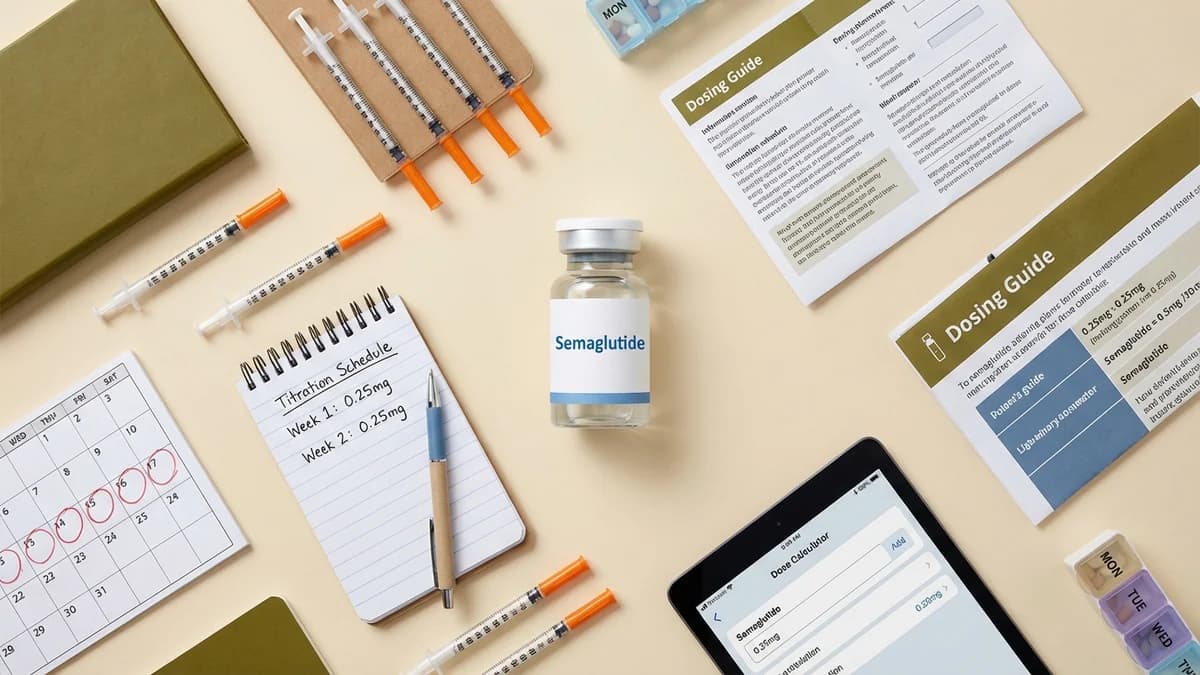
Key Takeaways
- Typical Dosing Ranges: Semaglutide is typically dosed starting at 0.25 mg once weekly, increasing to 1.0 mg for diabetes and up to 2.4 mg for weight loss.
- Titration Schedules: Dosing generally increases every four weeks to mitigate side effects and enhance tolerability.
- Medical Supervision: Due to potential side effects, dosing should be managed under medical guidance.
- Administration Method: Administered via subcutaneous injection, requiring knowledge of proper injection sites and techniques.
What Is Semaglutide?
Semaglutide is a glucagon-like peptide-1 (GLP-1) receptor agonist approved by the FDA for the treatment of type 2 diabetes and chronic weight management. It works by enhancing insulin secretion, reducing glucagon levels, and slowing gastric emptying, which contributes to its efficacy in glycemic control and weight loss (PMID 26308095).
Standard Dosing Protocols
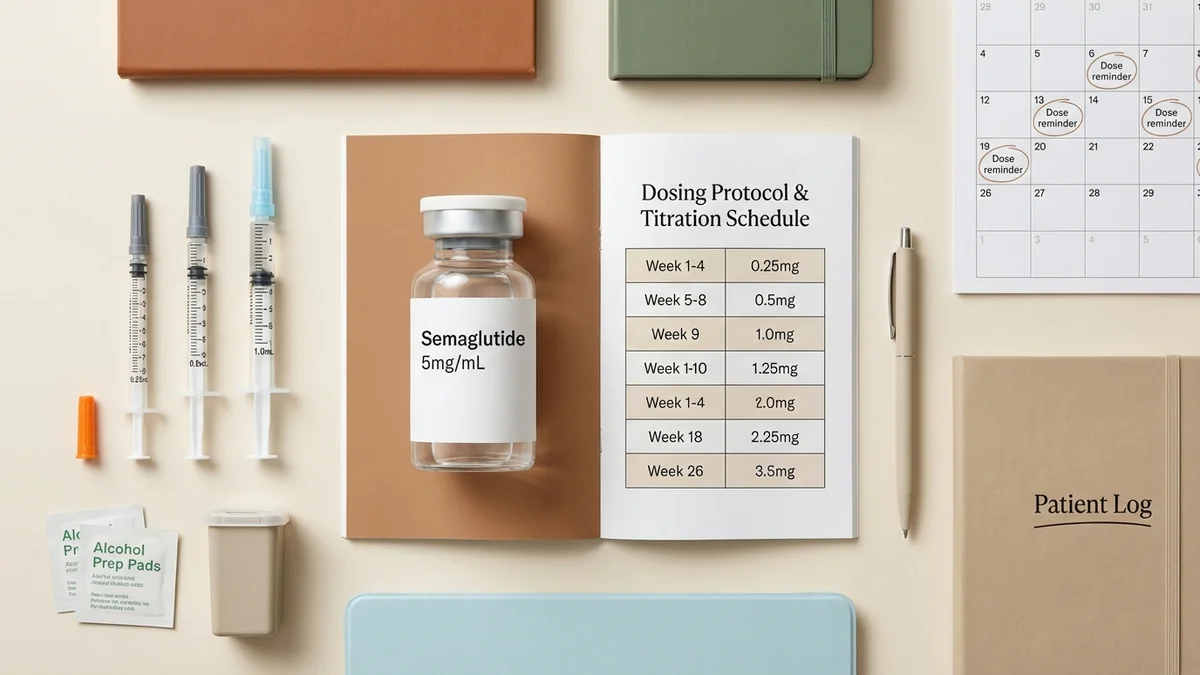
The FDA-approved dosing for semaglutide in type 2 diabetes starts at 0.25 mg weekly for four weeks. This initial dose is not therapeutic but allows patients to acclimate to the medication. The dose is then increased to 0.5 mg weekly. If additional glycemic control is needed, the dose can be increased to 1.0 mg weekly (FDA label). For weight management, the dose can be titrated up to 2.4 mg weekly (PMID 34305810).
Titration Schedules
Titration is crucial in semaglutide therapy to balance efficacy with tolerability. Patients typically start with 0.25 mg weekly for four weeks, then increase to 0.5 mg weekly. After another four weeks, the dose may increase to 1.0 mg. For weight loss, further increase to 1.7 mg and then to 2.4 mg is possible, each step spaced four weeks apart to minimize side effects like nausea (PMID 34305810).
Administration Method
Semaglutide is administered via subcutaneous injection using a pre-filled pen. Common injection sites include the abdomen, thigh, or upper arm. It's essential to rotate injection sites with each dose to reduce the risk of lipodystrophy. The pen is stored in a refrigerator between 2°C and 8°C but can be kept at room temperature for up to 56 days after the first use (FDA label).
Factors That Affect Dosing
Dosing adjustments may be necessary based on individual factors such as body weight, desired outcomes, and concurrent medications. Patients with renal or hepatic impairment may require modified dosing schedules. Clinical judgment is vital, as interactions with other glucose-lowering agents could necessitate adjustments (PMID 34305810).
What Happens If You Miss a Dose
If a dose is missed and it’s been less than five days since the scheduled dose, patients can administer it as soon as they remember. If more than five days have passed, skip the missed dose and resume the regular schedule. Never double the dose to make up for a missed one (FDA prescribing information).
Dosing Compared to Similar Peptides
Compared to tirzepatide, another GLP-1 receptor agonist, semaglutide requires careful titration to reach its maximum therapeutic dose. Tirzepatide, also used for diabetes and weight management, may offer different dosing frequencies and administration routes (PMID 34170647).
What the Evidence Does Not Show
While semaglutide is well-studied for short to medium-term use, long-term safety data is still being collected. The full spectrum of side effects and potential interactions over extended use beyond clinical trial durations remains less understood (PMID 34305810).
FAQ
How is semaglutide administered?
Semaglutide is administered as a subcutaneous injection. Common sites include the abdomen, thigh, or upper arm.
What should I do if I miss a semaglutide dose?
Administer the missed dose within five days if possible. If more than five days have passed, skip it and continue with the next scheduled dose.
Can semaglutide dosing be adjusted?
Yes, dosing may be adjusted based on individual factors like body weight, treatment goals, and other medications. Always consult with a healthcare provider.
What are common side effects during titration?
Nausea is common during the initial weeks of titration, affecting up to 20% of patients, but often decreases over time (PMID 34305810).
Is semaglutide suitable for everyone?
Semaglutide may not be appropriate for patients with certain medical conditions or those taking specific medications. Consultation with a healthcare provider is essential.
This content is for informational purposes only and does not constitute medical advice. Consult a licensed healthcare provider before starting any treatment.
Find a Peptide Therapy Clinic Near You
Browse our directory of verified peptide therapy clinics across the United States. Compare providers, read reviews, and request a consultation.
PeptideClinicLocator.com does not provide medical advice. Always consult a qualified healthcare provider before starting any peptide therapy. Regulatory status may change.