Peptide Recovery Protocols for Athletes: BPC-157, TB-500, and More (2026)
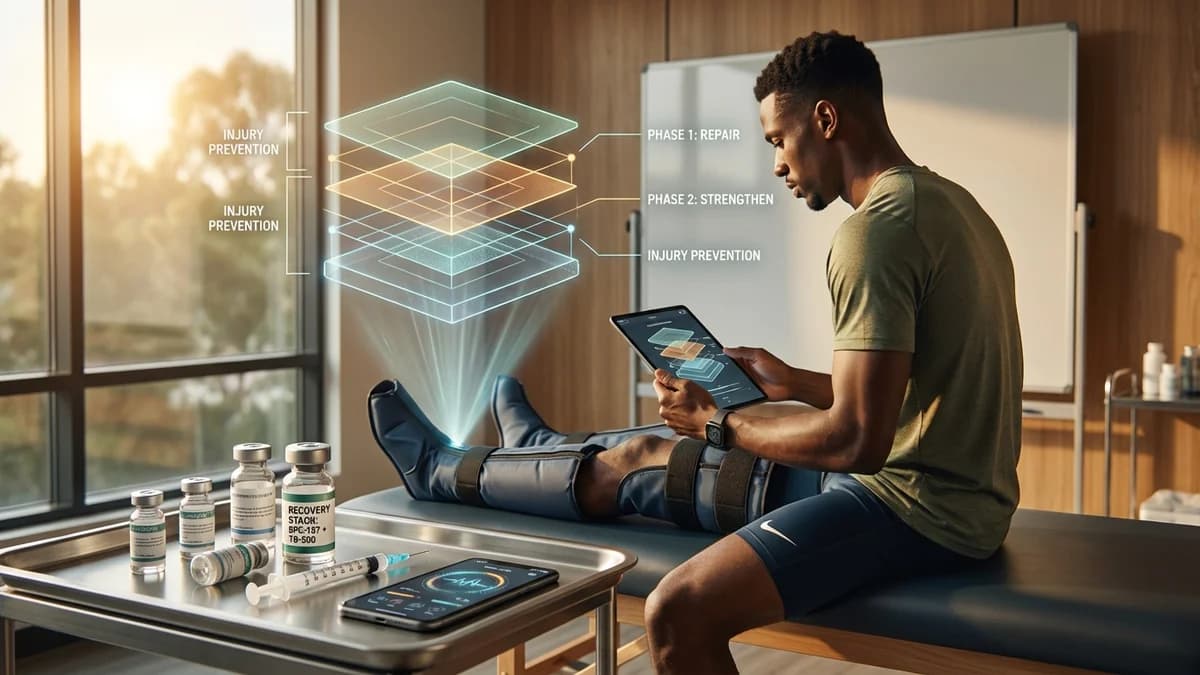
Peptide therapy for athletic recovery centers on a core stack of tissue repair peptides — primarily BPC-157 and TB-500 — often supplemented with GH secretagogues and anti-inflammatory compounds. Here is how physicians structure these protocols.
Why Athletes Use Peptides for Recovery
Athletic recovery peptides target different phases of the healing and adaptation process:
| Goal | Peptide | Mechanism |
|---|---|---|
| Acute injury healing | BPC-157 | Angiogenesis, tendon fibroblast activation |
| Broad tissue repair | TB-500 | Actin regulation, cell migration |
| Growth hormone pulse | Sermorelin / Ipamorelin / CJC-1295 | GH release → IGF-1 elevation |
| Anti-inflammatory | BPC-157 + TB-500 | Cytokine modulation |
| Collagen / skin | GHK-Cu | Collagen synthesis, anti-fibrotic |
| Muscle preservation | GH secretagogues + MOTS-c | Anabolic + metabolic |
Standard Recovery Protocol by Injury Type
Tendon / Ligament Injury
Primary: BPC-157 250–500 mcg SC daily (inject near injury site if possible, or systemically)
Support: TB-500 2.5–5 mg SC 2x/week
Duration: 8–12 weeks
Adjuncts: GHK-Cu 1–3 mg SC daily; consider collagen supplementation
Muscle Strain / Tear
Primary: TB-500 5 mg SC weekly for 4 weeks, then 2.5 mg/week for 4 more weeks
Support: BPC-157 250 mcg SC daily
Duration: 6–10 weeks
Adjuncts: Sermorelin or ipamorelin at bedtime (GH pulse supports protein synthesis and recovery)
Post-Surgical Recovery
Requires physician supervision. Typical approach:
- BPC-157 250–500 mcg SC daily × 12 weeks
- TB-500 2.5–5 mg SC weekly × 8 weeks
- GH secretagogue (sermorelin or CJC-1295/ipamorelin) for systemic anabolic support
General Performance Optimization / Maintenance
For athletes without active injury:
- GH secretagogue stack (CJC-1295 100 mcg + ipamorelin 200 mcg SC before bed): improved sleep quality, recovery rate, body composition
- Optional GHK-Cu 2 mg SC 3x/week for connective tissue maintenance
BPC-157 and TB-500: Why They're Often Combined
BPC-157 and TB-500 work through complementary mechanisms:
- BPC-157 is particularly effective for site-specific healing (especially tendons and ligaments) and gut tissue
- TB-500 has broader tissue distribution and is especially effective for muscle repair and reducing systemic inflammation
Used together, they address both local tissue repair and the broader inflammatory/cellular repair environment. Many clinics offer them as a pre-formulated blend.
Dosage Reference for Athletes
| Peptide | Typical Recovery Dose | Frequency | Route |
|---|---|---|---|
| BPC-157 | 250–500 mcg | Daily | SC |
| TB-500 | 2.5–5 mg | 2x/week (loading), weekly (maintenance) | SC |
| GHK-Cu | 1–3 mg | Daily or 3x/week | SC |
| CJC-1295 No-DAC | 100–300 mcg | 2x daily | SC |
| Ipamorelin | 200–300 mcg | 2–3x daily, empty stomach | SC |
| Sermorelin | 200–300 mcg | Daily, bedtime | SC |
Use our peptide calculator to convert mg doses to syringe units based on your reconstitution.
Legal and Competitive Status for Athletes
Athletes competing in regulated sports should verify peptide status before use:
- WADA (World Anti-Doping Agency): Growth hormone releasing peptides including ipamorelin, CJC-1295, GHRP-2, and GHRP-6 are prohibited in-competition and out-of-competition
- BPC-157: Currently not specifically listed by WADA as of 2026, but may fall under the general prohibition on "peptide hormones, growth factors, and related substances"
- TB-500 / Thymosin Beta-4: Listed as prohibited under WADA's growth factor category
If you compete under WADA or USADA jurisdiction, consult the prohibited list directly before using any peptide.
Frequently Asked Questions
What is the best peptide for athletic recovery?
The BPC-157 + TB-500 combination is the most established in clinical practice for tissue injury recovery. For performance optimization and sleep/recovery quality, GH secretagogues (CJC-1295/ipamorelin at bedtime) are commonly used.
How fast do recovery peptides work?
BPC-157 and TB-500 typically show initial effects (reduced pain, improved function) within 2–4 weeks. More complete structural healing takes 6–12 weeks. GH secretagogues show IGF-1 changes within 4–8 weeks; performance and body composition effects over 3–6 months.
Are recovery peptides legal in competitive sports?
Most GH secretagogues (ipamorelin, CJC-1295, GHRP-2/6, sermorelin) are WADA-prohibited. BPC-157 and TB-500 may be covered by WADA's broad category prohibition. Verify before use if you are subject to anti-doping testing.
Do recovery peptides require a prescription?
In the US, yes — peptides used clinically (BPC-157, TB-500, GH secretagogues) require a physician prescription and must be obtained from a licensed compounding pharmacy for legal, pharmaceutical-grade use.
For informational purposes only. Always consult a licensed physician before starting any peptide protocol. Competitive athletes should verify substances with relevant anti-doping authorities.
Peptide reconstitution calculator → | Find a peptide clinic →