PeptideClinicLocator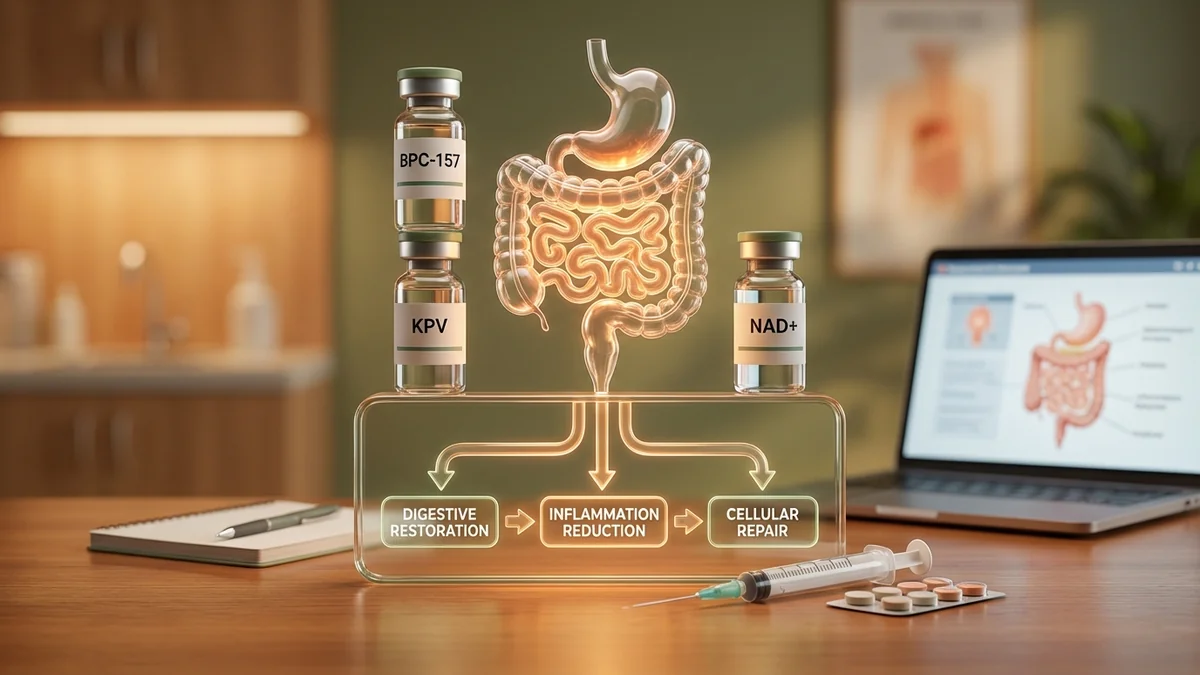
Key Takeaways
- The Gut Healing Peptide Protocol includes BPC-157, KPV, and NAD+.
- It targets conditions like leaky gut, IBS, and intestinal inflammation.
- BPC-157 is prohibited (Category 2) in the U.S., while KPV is research-only.
- Typical duration ranges from 4 to 8 weeks, depending on individual goals.
- NAD+ is legally available as a supplement and supports cellular repair.
What Is the Gut Healing Peptide Protocol?
The Gut Healing Peptide Protocol is a comprehensive approach designed to support gastrointestinal health through the use of specific peptides. This protocol is particularly popular among individuals seeking relief from conditions such as leaky gut syndrome, irritable bowel syndrome (IBS), and chronic intestinal inflammation. The protocol typically includes BPC-157, KPV, and NAD+.
- BPC-157: A synthetic peptide derived from a protective compound found in gastric juice, known for its tissue repair properties. It is currently classified as Category 2 (prohibited) by the FDA, meaning it cannot be compounded legally in the U.S. (PMID: 40005999).
- KPV: A tripeptide fragment of alpha-MSH, known for its anti-inflammatory effects. It is available for research purposes only and is not FDA-approved (PMID: 29953505).
- NAD+: A naturally occurring coenzyme involved in cellular energy metabolism and repair, available as a supplement (PMID: 22076378).
How the Gut Healing Peptide Protocol Works
The protocol leverages the synergistic effects of its components to promote gut health and repair.
- BPC-157: Facilitates localized repair by enhancing angiogenesis and protecting gastric mucosa. It has been shown to accelerate healing in various preclinical models (PMID: 30915550).
- KPV: Modulates inflammatory signaling pathways, particularly the NF-κB pathway, reducing cytokine production and promoting epithelial integrity (PMID: 29953505).
- NAD+: Supports systemic cellular repair and energy metabolism, contributing to overall gut health by improving mitochondrial function (PMID: 38878777).
Together, these peptides aim to restore gut integrity, reduce inflammation, and enhance cellular repair processes.
Gut Healing Peptide Protocol Dosing Protocol
Below is a structured dosing protocol for the Gut Healing Peptide Protocol:
| Peptide | Dose | Administration | Timing | Cycle Length | |---------|------|----------------|--------|--------------| | BPC-157 | 250-500 mcg | Oral | 1-2x daily | 4-8 weeks | | KPV | 200-500 mcg | Oral/Subcutaneous | Daily | 4-8 weeks | | NAD+ | 100-300 mg | Oral/IV | Daily | 4-8 weeks |
Note: BPC-157 is prohibited in the U.S. and should not be used without proper legal considerations.
Administration Guide
Practical administration guidelines for the protocol include:
- Mixing: Peptides should be administered separately; do not mix in one syringe.
- Timing: Administer peptides at least 30 minutes before meals to enhance absorption.
- Reconstitution: Use bacteriostatic water for reconstituting lyophilized peptides.
- Storage: Store reconstituted peptides in the refrigerator and use within 30 days.
- Equipment: Use a 1ml syringe with a 29-31 gauge needle for subcutaneous injections.
Who Is This Protocol For?
Athletes Recovering from Injury
Athletes may benefit from the protocol due to BPC-157's tissue repair properties, which can aid in the recovery of musculoskeletal injuries.
Post-Surgical Recovery
Patients recovering from gastrointestinal surgeries may use the protocol to enhance healing and reduce inflammation.
Anti-Aging / Longevity Goals
NAD+ is popular in anti-aging circles for its role in cellular repair and energy metabolism, making the protocol attractive for longevity enthusiasts.
Specific Conditions
Individuals with leaky gut or IBS may find relief from symptoms due to the anti-inflammatory and gut-repairing effects of the peptides.
Expected Results and Timeline
- Week 1-2: Users commonly report a reduction in inflammation and mild symptom relief.
- Week 3-4: Enhanced gut integrity and further symptom improvement are typical.
- Week 5-8: Full effects are often observed, including improved digestion and reduced discomfort.
- Post-Cycle: Benefits may persist, but some symptoms may return if underlying causes are not addressed.
Potential Side Effects and Risks
- BPC-157: Rare side effects include nausea and dizziness. It is contraindicated for use without medical supervision due to its prohibited status.
- KPV: Minimal side effects reported, but long-term safety is not well-studied.
- NAD+: May cause flushing or gastrointestinal discomfort in some users.
Medical supervision is crucial for monitoring potential interactions and adjusting doses as needed.
Legal and Regulatory Status
- BPC-157: Category 2 (prohibited for compounding).
- KPV: Research-only, not FDA-approved.
- NAD+: Available as a supplement, Category 1 (compoundable).
In the U.S., the complete protocol cannot be legally prescribed due to the status of BPC-157 and KPV.
Alternative Protocols
- NAD+ and Lifestyle Modifications: Focus on dietary changes and NAD+ supplementation for gut health.
- Probiotic and Prebiotic Supplements: Support gut flora balance without the use of prohibited peptides.
- Collagen and Glutamine Supplementation: Promote gut integrity and repair through legal, over-the-counter options.
What the Evidence Does Not Show
While individual peptides like BPC-157 and KPV show promise in preclinical studies, there is a lack of human studies on their combined use. The protocol's efficacy is extrapolated from individual peptide data rather than direct clinical evidence.
FAQ
How long should I run this protocol?
Typically, 4-8 weeks, depending on individual response and goals.
Can I modify the doses?
Doses should only be modified under medical supervision.
Is this protocol legal?
BPC-157 is prohibited, and KPV is research-only, making the full protocol not legally prescribable in the U.S.
Do I need a prescription?
Yes, for peptides like NAD+ in IV form; however, BPC-157 and KPV cannot be legally prescribed.
Can women use this protocol?
Yes, but they should consult a healthcare provider for personalized advice.
What bloodwork should I get?
Regular monitoring of inflammatory markers and gut health indicators is recommended.
Where can I find a clinic that offers this?
Visit our clinic finder to locate clinics offering legal peptide therapies.
Medical Disclaimer
This content is for informational purposes only and does not constitute medical advice. Consult a licensed healthcare provider before starting any treatment.
Find a Peptide Therapy Clinic Near You
Browse our directory of verified peptide therapy clinics across the United States. Compare providers, read reviews, and request a consultation.
PeptideClinicLocator.com does not provide medical advice. Always consult a qualified healthcare provider before starting any peptide therapy. Regulatory status may change.