PeptideClinicLocator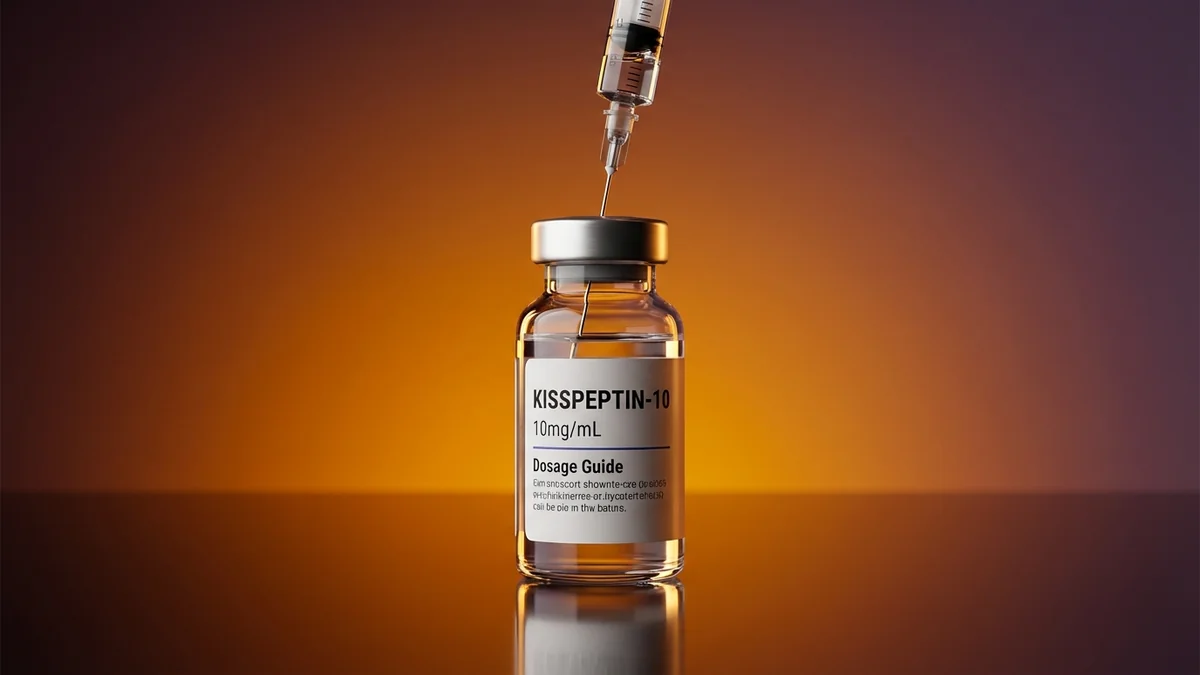
Kisspeptin-10 Dosage Guide: How Much Should You Take? (2026)
Key Takeaways
- Standard Dosage Range: Typically administered subcutaneously in dosages ranging from 100 mcg to 300 mcg per injection.
- Administration Method: Primarily subcutaneous injection due to its bioavailability and targeted delivery.
- Typical Cycle Length: Cycles generally last 4-12 weeks, depending on therapeutic goals.
- Regulatory Status: Classified as a research peptide, not FDA-approved for clinical use.
- Medical Supervision: Essential for safe and effective use, given its potent effects on hormone regulation.
How Kisspeptin-10 Works in the Body
Kisspeptin-10 is a neuropeptide that plays a critical role in reproductive hormone regulation. Its mechanism of action involves binding to the GPR54 receptor, which in turn stimulates the release of gonadotropin-releasing hormone (GnRH) from the hypothalamus. This cascade effect leads to the secretion of luteinizing hormone (LH) and follicle-stimulating hormone (FSH), pivotal for reproductive function (PMID 39605118).
The pharmacokinetic properties of Kisspeptin-10, including its receptor binding affinity and relatively short half-life, necessitate careful consideration in dosing. Its bioavailability is optimal when administered via subcutaneous injection, allowing direct access to systemic circulation and minimizing degradation. Studies indicate that the peptide's effects are dose-dependent, with higher doses eliciting more pronounced hormonal responses (PMID 32427949).
"Kisspeptin-10's ability to modulate the hypothalamic-pituitary-gonadal axis underscores its potential in treating reproductive disorders, though its use requires precise dosing to avoid adverse effects."
Standard Kisspeptin-10 Dosage Ranges (By Form)
Subcutaneous Injection
- Dosage Range: 100 mcg to 300 mcg per injection.
- Frequency: Typically administered once daily or every other day.
- Bioavailability: High, due to direct systemic entry and reduced degradation.
- Commonality: The subcutaneous route is preferred for its efficacy in delivering consistent hormonal stimulation.
Intramuscular Injection
- Dosage Range: Similar to subcutaneous, though less commonly used.
- Frequency: Once daily to weekly, depending on clinical protocols.
- Bioavailability: Slightly lower than subcutaneous due to muscle absorption variability.
Comparison
Subcutaneous administration remains the most prevalent form due to its superior bioavailability and ease of administration. Intramuscular injections are used less frequently and typically reserved for specific clinical scenarios where deeper tissue penetration is necessary.
Kisspeptin-10 Dosage by Use Case
Sexual Wellness
- Dosage Range: 100 mcg to 200 mcg daily.
- Administration Method: Subcutaneous injection.
- Cycle Length: 8-12 weeks.
- Clinical Reference: Studies demonstrate enhanced sexual arousal and function in both genders with consistent dosing (PMID 39605118).
- Guidance: Many clinics initiate treatment with lower doses, gradually increasing as tolerated.
Hormone Regulation
- Dosage Range: 150 mcg to 300 mcg daily.
- Administration Method: Subcutaneous injection.
- Cycle Length: 4-8 weeks.
- Clinical Reference: Kisspeptin-10 effectively modulates LH and FSH levels, aiding in conditions like hypogonadism (PMID 32427949).
- Guidance: Clinical protocols often recommend monitoring hormone levels bi-weekly to adjust dosing.
Infertility Treatment
- Dosage Range: 200 mcg to 300 mcg daily.
- Administration Method: Subcutaneous injection.
- Cycle Length: 6-10 weeks.
- Clinical Reference: Kisspeptin-10 shows promise in enhancing fertility through improved gonadotropic function (PMID 38978171).
- Guidance: Treatment is often combined with other fertility agents to maximize outcomes.
How Long Should You Take Kisspeptin-10?
Typical cycles for Kisspeptin-10 last between 4 to 12 weeks, with the duration tailored to the therapeutic goal. During the initial week, patients may notice subtle hormonal changes, with more significant effects emerging between weeks 2 to 4. By week 6 and beyond, many report stabilized hormone levels and improved symptoms related to their specific condition.
Tapering off Kisspeptin-10 is generally not required, though some practitioners may recommend a gradual reduction in dosage to assess the body's adaptive response. Clinical trials suggest that discontinuation does not lead to rebound hormonal imbalances, but monitoring is advised (PMID 26852256).
Administration Protocol: How to Take Kisspeptin-10
Injection Technique
- Needle Gauge: 29-31 gauge is recommended for subcutaneous injections.
- Injection Sites: Rotate between the abdomen, thigh, and upper arm to minimize site irritation.
- Rotation Schedule: Change injection sites with each administration to prevent tissue damage.
Storage Requirements
- Temperature: Store vials at 2-8°C (36-46°F) and protect from light.
- Reconstituted Stability: Use within 28 days when stored in the refrigerator.
Reconstitution Instructions
- Procedure: Use bacteriostatic water to reconstitute the peptide. Gently swirl the vial until the powder is fully dissolved. Reconstitution Guide.
Step-by-Step Administration
- Wash hands thoroughly.
- Prepare the injection site with an alcohol swab.
- Draw the required dose into an insulin syringe.
- Pinch the skin at the injection site and insert the needle at a 45-degree angle.
- Inject the peptide slowly and remove the needle.
- Dispose of the syringe in a sharps container.
Stacking Kisspeptin-10 for Better Results
Common Stacks
With GHRP-2
- Purpose: Enhances growth hormone release alongside reproductive benefits.
- Dosing Synergy: Kisspeptin-10 at 100-200 mcg with GHRP-2 at 100 mcg, administered subcutaneously.
- Protocols: Used in anti-aging and wellness clinics for comprehensive hormonal support.
With CJC-1295
- Purpose: Synergistic effect on hormone regulation and metabolic function.
- Dosing Synergy: Kisspeptin-10 at 150 mcg and CJC-1295 at 100 mcg, used in alternating cycles.
- Protocols: Common in protocols targeting both reproductive health and overall vitality.
Factors That Affect Your Kisspeptin-10 Dosage
Several factors influence the appropriate dosage of Kisspeptin-10, including:
- Body Weight: Heavier individuals may require higher doses to achieve the desired hormonal effect.
- Age: Younger patients often respond more robustly, necessitating careful dose adjustments.
- Treatment Goals: Specific conditions, such as infertility, may require more aggressive dosing.
- Kidney/Liver Function: Impaired function can alter peptide metabolism, affecting dosing decisions.
- Individual Response: Variability in receptor sensitivity may necessitate personalized dosing.
Healthcare providers tailor Kisspeptin-10 dosing based on these factors, emphasizing the need for individualized treatment plans.
Common Dosing Mistakes to Avoid
- Dosing Too High/Too Low: Incorrect dosing can lead to suboptimal outcomes or adverse effects. Always follow clinical guidance.
- Inconsistent Timing: Administering doses at irregular intervals can disrupt hormonal balance.
- Wrong Injection Site: Using inappropriate sites can affect absorption and efficacy.
- Not Accounting for Regulatory Status: Ensure usage complies with legal and ethical standards.
- Poor Storage/Handling: Improper storage can degrade the peptide, reducing its effectiveness.
What the Evidence Does Not Show
While Kisspeptin-10 shows promise in hormone regulation and reproductive health, limitations exist:
- Long-term Safety Data: There is a lack of comprehensive studies on prolonged use.
- Limited Human Trials: Most data derive from animal studies or small-scale human trials.
- Dose-Response Data: Detailed studies on varying doses and their specific outcomes are limited.
These gaps highlight the importance of cautious use under medical supervision.
FAQ — Your Top Kisspeptin-10 Dosage Questions Answered
What is the best time of day to take Kisspeptin-10?
Many patients administer it in the morning to align with natural hormonal rhythms.
What if you miss a dose?
Resume your regular schedule without doubling the dose. Consult your provider if multiple doses are missed.
Can men and women use the same dose?
Dosing may vary by gender due to different hormonal baselines. Providers will adjust accordingly.
Can you stack it with other peptides?
Yes, it is commonly stacked with peptides like GHRP-2 for enhanced results.
How long until you see results?
Patients often notice changes within 2-4 weeks, with more significant effects by week 6.
Do you need to cycle off?
Cycling off is generally not required, but periodic assessments are recommended.
Is a loading dose needed?
A loading dose is not typically necessary, as gradual titration is preferred.
How to adjust dose if side effects occur?
Reduce the dose and consult your healthcare provider for further guidance.
Conclusion — Finding the Right Dosage for You
Determining the optimal Kisspeptin-10 dosage requires a nuanced approach, considering individual health factors and treatment goals. Always seek medical supervision to ensure safe and effective use. For more information, explore our peptide encyclopedia and use our clinic finder to locate a qualified provider near you.
Medical Disclaimer
This content is for informational purposes only and does not constitute medical advice. Dosage information is compiled from published research and clinical protocols. Consult a licensed healthcare provider before starting any peptide therapy. Use our clinic finder to locate a qualified provider near you.
Find a Peptide Therapy Clinic Near You
Browse our directory of verified peptide therapy clinics across the United States. Compare providers, read reviews, and request a consultation.
PeptideClinicLocator.com does not provide medical advice. Always consult a qualified healthcare provider before starting any peptide therapy. Regulatory status may change.