PeptideClinicLocator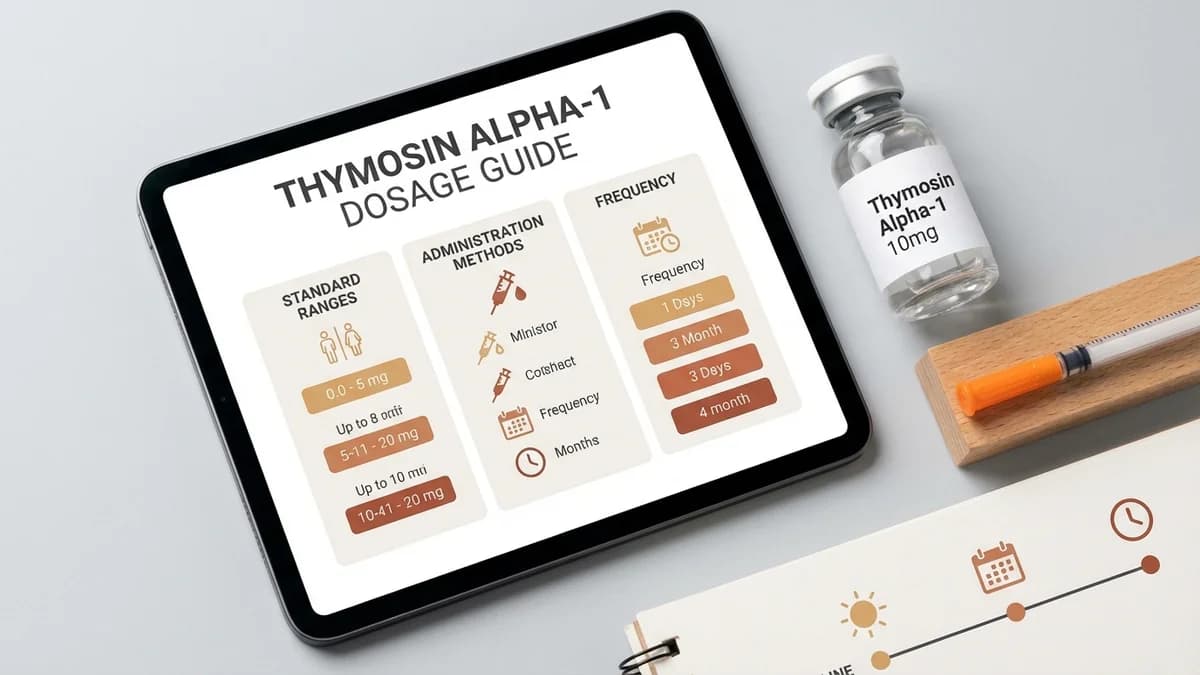
Thymosin Alpha-1 Dosage Guide: How Much Should You Take? (2026)
Key Takeaways
- Standard Dosage Range: Thymosin Alpha-1 is typically administered in doses ranging from 1.6 mg to 3.2 mg per week, depending on the form and therapeutic goal.
- Administration Method: Most commonly delivered via subcutaneous injection, though alternative forms exist.
- Typical Cycle Length: Commonly used in cycles of 4 to 12 weeks, with variations based on specific treatment goals.
- Regulatory Status: Thymosin Alpha-1 is not FDA-approved and is available for research purposes only.
- Medical Supervision: Essential for determining the appropriate dosage and monitoring for potential side effects.
How Thymosin Alpha-1 Works in the Body
Thymosin Alpha-1 is a synthetic polypeptide consisting of 28 amino acids, derived from the thymic hormone thymosin fraction 5. Its primary mechanism of action involves modulation of the immune system, specifically through interactions with the MyD88/NF-κB signaling pathway. This interaction plays a crucial role in immune homeostasis and T-cell function.
The peptide binds to receptors that activate the MyD88-dependent signaling cascade, leading to enhanced T-cell responses and modulation of cytokine production. This mechanism is particularly relevant in conditions involving immune dysregulation, such as chronic infections and cancer. The half-life of Thymosin Alpha-1 is approximately 2 hours, with bioavailability dependent on the route of administration.
"Thymosin Alpha-1 significantly reverses M2 polarization of IL10-producing tumor-associated macrophages during efferocytosis." (PMID 35364609)
"TA1 is thought to modulate the immune system by augmenting T-cell function." (PMID 11381492)
These pharmacokinetic properties underscore the importance of precise dosing to achieve therapeutic effects without adverse outcomes.
Standard Thymosin Alpha-1 Dosage Ranges (By Form)
Subcutaneous Injection
- Dosage Range: 1.6 mg to 3.2 mg per week, divided into 2-3 doses.
- Frequency: Typically administered 2-3 times per week.
- Bioavailability: High, as subcutaneous injections bypass first-pass metabolism.
- Common Usage: Preferred due to ease of administration and consistent absorption.
Intramuscular Injection
- Dosage Range: Similar to subcutaneous, though less commonly used.
- Frequency & Bioavailability: Comparable to subcutaneous with minor variations in absorption rates.
Oral Administration
- Dosage Range: Not commonly used due to low bioavailability; typically higher doses required to achieve therapeutic levels.
- Frequency: Daily dosing may be necessary.
- Bioavailability: Significantly lower compared to injectable forms.
Subcutaneous administration remains the most common due to its balance of efficacy and convenience. Clinical protocols often favor this route for its reliable absorption and patient compliance.
Thymosin Alpha-1 Dosage by Use Case
Chronic Hepatitis B
- Typical Dosage Range: 1.6 mg to 3.2 mg per week.
- Administration Method: Subcutaneous injection.
- Cycle Length: 6 to 12 months, often in combination with antiviral therapy.
- Clinical Reference: Thymosin Alpha-1 has been studied in combination with nucleos(t)ide analogs for enhancing T-cell response in chronic hepatitis B patients (PMID 25640173).
Cancer Immunotherapy
- Typical Dosage Range: 1.6 mg to 3.2 mg per week.
- Administration Method: Subcutaneous injection.
- Cycle Length: 8 to 12 weeks, with potential for longer-term use depending on response.
- Practical Guidance: Many clinics prescribe Thymosin Alpha-1 as part of a broader immunotherapeutic regimen to modulate tumor microenvironments.
Age-Related Immune Decline
- Typical Dosage Range: 1.6 mg per week.
- Administration Method: Subcutaneous injection.
- Cycle Length: 4 to 8 weeks, with periodic reassessment.
- Clinical Reference: Studies indicate Thymosin Alpha-1's potential to enhance thymic output and T-cell differentiation in aging populations (PMID 41373628).
How Long Should You Take Thymosin Alpha-1?
The typical treatment duration for Thymosin Alpha-1 ranges from 4 to 12 weeks, depending on the therapeutic goal and patient response. Initial effects may be observed within the first few weeks, with more pronounced outcomes often requiring extended administration.
- Week 1: Initial immune modulation begins; some patients report mild improvements in symptoms.
- Weeks 2-4: Enhanced T-cell activity and cytokine modulation become more evident.
- Week 6+: Continued improvement in immune function, with potential stabilization of therapeutic effects.
Tapering is generally not required, but ongoing assessment by a healthcare provider is crucial to determine the need for continuation or cessation of therapy. Clinical trials often inform these cycle lengths, though individual variation is common.
Administration Protocol: How to Take Thymosin Alpha-1
Injection Technique
- Needle Gauge: 29-31 gauge is recommended for subcutaneous injections.
- Injection Sites: Rotate between the abdomen, thigh, and upper arm to minimize tissue irritation.
- Rotation Schedule: Change injection sites with each administration to prevent localized tissue damage.
Storage Requirements
- Temperature: Store vials at 2-8°C (36-46°F) before reconstitution.
- Light Sensitivity: Protect from light exposure.
- Stability: Once reconstituted, the solution should be used within 14 days if stored properly.
Reconstitution Instructions
- Diluent: Use bacteriostatic water for injection.
- Process: Gently swirl the vial to mix; avoid shaking vigorously.
Step-by-Step Administration
- Preparation: Wash hands and gather supplies (syringe, needle, alcohol swab, vial).
- Reconstitution: Mix the peptide with the diluent as instructed.
- Drawing the Dose: Use a sterile syringe to draw the required dose.
- Injection: Clean the injection site with an alcohol swab, then inject at a 45-degree angle.
- Post-Injection: Dispose of needles safely and monitor the site for any adverse reactions.
Stacking Thymosin Alpha-1 for Better Results
Thymosin Alpha-1 and Thymosin Beta-4
- Combination: Often used together for enhanced tissue repair and immune modulation.
- Dosing Synergy: Thymosin Alpha-1 at 1.6 mg/week, Thymosin Beta-4 at 2 mg/week.
- Common Protocols: Utilized in regenerative medicine protocols to support recovery and immune function.
Thymosin Alpha-1 and BPC-157
- Combination: Known for their complementary roles in healing and immune support.
- Dosing Synergy: Thymosin Alpha-1 at 1.6 mg/week, BPC-157 at 500 mcg/day.
- Common Protocols: Often prescribed in protocols aimed at enhancing gut health and systemic recovery.
Factors That Affect Your Thymosin Alpha-1 Dosage
Dosage adjustments for Thymosin Alpha-1 are influenced by several factors, including:
- Body Weight: Heavier individuals may require higher doses to achieve therapeutic effects.
- Age: Older adults may need adjusted doses due to changes in immune function.
- Treatment Goals: Specific conditions may necessitate different dosing strategies.
- Kidney/Liver Function: Impairments may alter peptide metabolism and clearance.
- Other Medications: Concomitant treatments can interact with peptide therapy, affecting dosing.
Healthcare providers tailor dosing regimens based on these considerations to optimize outcomes and minimize risks.
Common Dosing Mistakes to Avoid
- Dosing Too High/Too Low: Adhering to recommended ranges is crucial for efficacy and safety.
- Inconsistent Timing: Maintaining a consistent dosing schedule enhances therapeutic effects.
- Wrong Injection Site for the Goal: Proper site rotation is essential to avoid tissue damage.
- Not Accounting for Regulatory Status: Thymosin Alpha-1 is for research use only; ensure compliance with local regulations.
- Poor Storage/Handling: Improper storage can degrade peptide potency.
What the Evidence Does Not Show
While Thymosin Alpha-1 shows promise in various applications, there are limitations to the current evidence:
- Long-Term Safety Data Gaps: Limited data on prolonged use and potential long-term effects.
- Lack of Human Trials: Many studies remain preclinical or in early-phase trials.
- Dose-Response Data Limitations: Variability in responses necessitates further research to establish standardized dosing protocols.
FAQ — Your Top Thymosin Alpha-1 Dosage Questions Answered
Best time of day to take it?
Thymosin Alpha-1 can be administered at any time, though consistency is key. Some prefer evening doses to align with natural circadian rhythms.
What if you miss a dose?
If a dose is missed, take it as soon as possible unless it's close to the next scheduled dose. Do not double up.
Can men and women use the same dose?
Yes, dosing is typically based on therapeutic goals and individual factors rather than gender.
Can you stack it with other peptides?
Yes, Thymosin Alpha-1 is often stacked with peptides like Thymosin Beta-4 and BPC-157 for synergistic effects.
How long until you see results?
Initial effects may be noticeable within a few weeks, with full benefits often requiring longer-term use.
Do you need to cycle off?
Cycling off is not always necessary, but ongoing assessment by a healthcare provider is recommended.
Is a loading dose needed?
A loading dose is not typically required; standard dosing protocols are generally effective.
How to adjust dose if side effects occur?
Consult with a healthcare provider to adjust dosing if adverse effects are experienced.
Conclusion — Finding the Right Dosage for You
Determining the right Thymosin Alpha-1 dosage involves careful consideration of individual factors and therapeutic goals. Standard dosing ranges provide a starting point, but medical supervision is essential for safe and effective use. For more information on peptide therapy, visit our clinic finder and explore related peptide profiles like Thymosin Beta-4 and BPC-157.
Medical Disclaimer
This content is for informational purposes only and does not constitute medical advice. Dosage information is compiled from published research and clinical protocols. Consult a licensed healthcare provider before starting any peptide therapy. Use our clinic finder to locate a qualified provider near you.
Find a Peptide Therapy Clinic Near You
Browse our directory of verified peptide therapy clinics across the United States. Compare providers, read reviews, and request a consultation.
PeptideClinicLocator.com does not provide medical advice. Always consult a qualified healthcare provider before starting any peptide therapy. Regulatory status may change.