Key Takeaways
- SNAP-8 is not FDA-approved and is available for research purposes only.
- Typical dosing protocols are not established; research often uses topical application.
- Titration is crucial for optimizing tolerability and efficacy.
- Administration is typically topical, with specific guidelines for application.
- Medical supervision is essential to tailor dosing to individual needs.
What Is SNAP-8?
SNAP-8 is a synthetic octapeptide derived from SNAP-25, primarily used in research settings for its potential neuromodulatory effects. It functions by inhibiting catecholamine release through competition with SNAP-25 in the SNARE complex assembly. For a more comprehensive overview, visit the SNAP-8 profile.
Standard Dosing Protocols
SNAP-8 is not approved by the FDA for clinical use, and therefore, no standard dosing protocols are available. Research applications typically use topical administration, with concentrations and application frequency varying based on study design. For example, some preclinical studies apply SNAP-8 in a concentration range of 3-10% in topical formulations (PMID 29395804).
Titration Schedules
In research settings, titration schedules for SNAP-8 are designed to assess tolerability and optimize efficacy. Initial applications may start at lower concentrations, gradually increasing as tolerated. This approach helps in minimizing potential adverse reactions while evaluating the peptide's effect on neuromodulation.
Administration Method
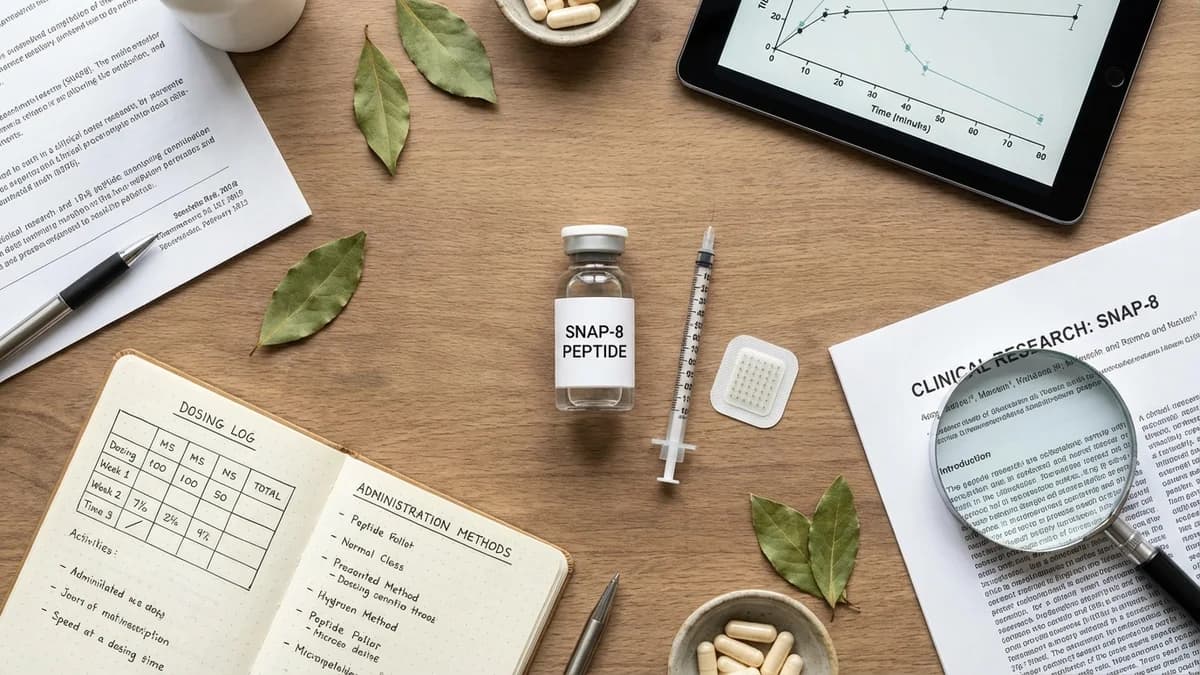
SNAP-8 is administered topically. This involves applying a cream or gel containing the peptide to the skin, typically on the face or other areas of interest. Proper storage is crucial, often requiring refrigeration to maintain stability. Reconstitution is not applicable as it is provided in pre-formulated topical preparations.
Factors That Affect Dosing
Several factors can influence SNAP-8 dosing, including:
- Body Weight: Heavier individuals may require different concentrations.
- Treatment Goals: Objectives such as wrinkle reduction may dictate dosing frequency.
- Other Medications: Concurrent medications can affect peptide metabolism.
- Organ Function: Liver and kidney function may impact peptide clearance.
What Happens If You Miss a Dose
In research settings, missing a dose of SNAP-8 typically requires resuming the next scheduled application. Consistency is key in research protocols to ensure reliable data collection. However, specific guidance should be followed as per the study design or under professional supervision.
Dosing Compared to Similar Peptides
Compared to other peptides like Argireline, which also targets neuromodulation, SNAP-8 is similarly applied topically. However, Argireline has more established usage in cosmetic applications, whereas SNAP-8 remains primarily in the research domain.
What the Evidence Does Not Show
Current research on SNAP-8 is limited to preclinical studies, with no long-term safety data available. The efficacy and safety in human populations remain unverified, and its use should be confined to controlled research environments (PMID 9643626).
FAQ
What is the typical concentration used for SNAP-8?
Research concentrations typically range from 3-10% in topical formulations.
Is SNAP-8 safe for long-term use?
There is no long-term safety data available for SNAP-8, and it should be used under research conditions.
How is SNAP-8 stored?
SNAP-8 should be stored in a cool, refrigerated environment to maintain stability.
Can SNAP-8 be used with other skincare products?
While research settings may combine SNAP-8 with other agents, this should be done cautiously and under professional guidance.
Is SNAP-8 effective for wrinkle reduction?
While SNAP-8 is studied for neuromodulation, its efficacy for cosmetic purposes like wrinkle reduction is not yet fully established.
Medical Disclaimer: This content is for informational purposes only and does not constitute medical advice. Consult a licensed healthcare provider before starting any treatment.