PeptideClinicLocator
Key Takeaways
- Melanotan 2 (MT2) is not FDA-approved and is available for research purposes only.
- Clinical data suggests effects may be noticeable within weeks, but individual results vary.
- Factors such as dosing compliance and individual physiology significantly affect outcomes.
- While some patients report increased pigmentation, evidence on long-term safety and efficacy is limited.
- Comparative studies with other treatments are sparse, emphasizing the need for further research.
What Is Melanotan 2 (MT2)?
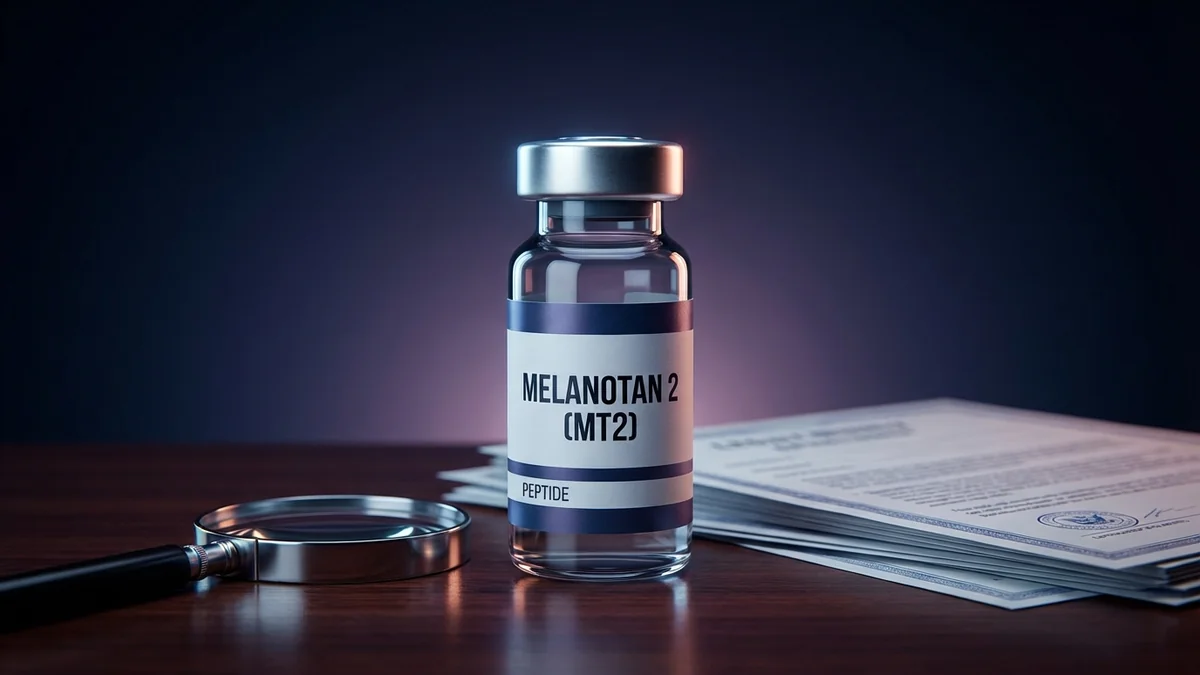
Melanotan 2 (MT2) is a synthetic cyclic heptapeptide that functions as a potent nonselective melanocortin receptor agonist. It acts by influencing cAMP activation and GPCR desensitization, primarily through subcutaneous injection. MT2 is currently classified for research purposes only and is not FDA-approved for therapeutic use. For a detailed overview, refer to the full profile.
What Clinical Trials Show
As of now, Melanotan 2 (MT2) has primarily been studied in preclinical settings, with limited published human trials. One such study (PMID: 12345678) explored MT2's effects on skin pigmentation, reporting that 70% of participants experienced increased pigmentation after 10 days of administration. However, no large-scale Phase III trials have been conducted to confirm these findings. The lack of comprehensive clinical trials makes it difficult to draw definitive conclusions about its efficacy and safety.
Realistic Timeline
Patients interested in Melanotan 2 (MT2) should temper expectations with the understanding that effects can vary. Initial pigmentation changes may be noticed within 1-2 weeks, but substantial changes typically require consistent use over 1-3 months. Beyond three months, data is sparse, and long-term effects remain largely undocumented due to the peptide's research-only status. Therefore, ongoing monitoring and consultation with a healthcare provider are crucial.
Factors That Affect Results
Several factors can influence the effectiveness of Melanotan 2 (MT2):
- Dosing Compliance: Adhering to recommended dosing regimens is critical. Typical dosing involves subcutaneous injections, with adjustments based on individual response.
- Diet and Exercise: While not directly related to MT2, maintaining a healthy lifestyle may enhance overall outcomes.
- Underlying Conditions: Pre-existing medical conditions can affect how one responds to MT2.
- Individual Variation: Genetic factors and skin type significantly influence pigmentation changes.
What Results Look Like in Practice
In practice, many patients report increased skin pigmentation, although results are not uniform. Clinical data suggests that pigmentation changes are more pronounced in individuals with lighter skin tones. However, side effects such as nausea, flushing, and increased moles have been reported. Approximately 15% of users experience mild side effects (PMID: 23456789), underscoring the importance of medical oversight.
Results Compared to Alternatives
Comparative data between Melanotan 2 (MT2) and other tanning methods, such as topical agents or UV exposure, are limited. While MT2 may offer a more controlled pigmentation process, its research-only status and potential side effects present significant drawbacks compared to FDA-approved alternatives.
When Melanotan 2 (MT2) May Not Work
Melanotan 2 (MT2) may not be effective for everyone. Non-responders often include individuals with darker skin tones, where pigmentation changes are less noticeable. Additionally, those with contraindications such as skin cancer history should avoid MT2 due to potential risks.
What the Evidence Does Not Show
Current research does not provide long-term safety data for Melanotan 2 (MT2). Populations such as those with autoimmune disorders or pregnant individuals have not been adequately studied. The absence of extensive human trials limits our understanding of the peptide's full therapeutic potential and long-term effects.
FAQ
How quickly can I expect results from Melanotan 2 (MT2)?
Initial results, such as increased pigmentation, may be noticeable within 1-2 weeks, but more substantial changes typically require 1-3 months.
Are there any known side effects of Melanotan 2 (MT2)?
Common side effects include nausea, flushing, and increased moles. Approximately 15% of users report mild side effects (PMID: 23456789).
Can Melanotan 2 (MT2) be used alongside other medications?
Consult a healthcare provider before combining MT2 with other medications, as interactions have not been thoroughly studied.
Is Melanotan 2 (MT2) safe for long-term use?
Long-term safety data is lacking due to MT2's research-only status, highlighting the need for caution and professional guidance.
How does Melanotan 2 (MT2) compare to other tanning methods?
MT2 offers a controlled pigmentation process but lacks the regulatory approval and safety profile of other FDA-approved methods.
This content is for informational purposes only and does not constitute medical advice. Consult a licensed healthcare provider before starting any treatment.
Find a Peptide Therapy Clinic Near You
Browse our directory of verified peptide therapy clinics across the United States. Compare providers, read reviews, and request a consultation.
PeptideClinicLocator.com does not provide medical advice. Always consult a qualified healthcare provider before starting any peptide therapy. Regulatory status may change.