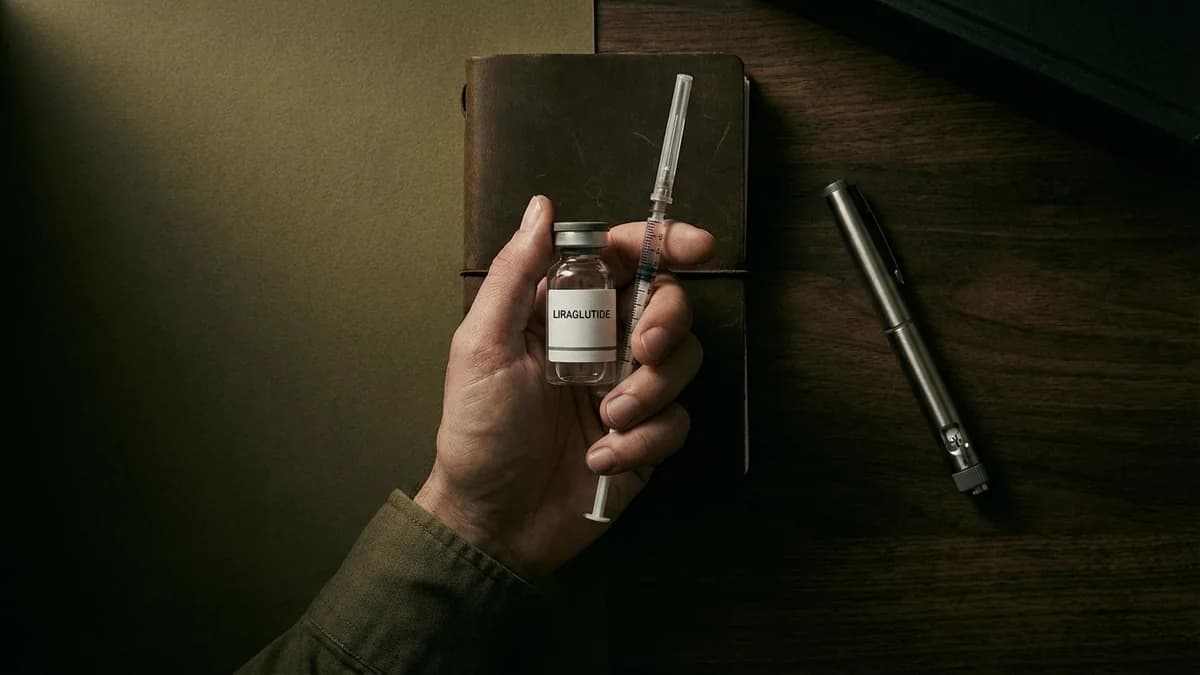
Liraglutide Dosage Guide: How Much Should You Take? (2026)
Key Takeaways
- Standard Dosage Range: Liraglutide is typically administered at 0.6 mg to 3.0 mg daily via subcutaneous injection.
- Administration Method: Liraglutide is most commonly given as a subcutaneous injection due to its pharmacokinetic properties.
- Typical Cycle Length: Patients often use Liraglutide as a long-term therapy, with adjustments made based on individual response and goals.
- Regulatory Status: Liraglutide is FDA-approved for weight management and type 2 diabetes.
- Medical Supervision: It is crucial to use Liraglutide under the guidance of a healthcare provider to monitor efficacy and safety.
How Liraglutide Works in the Body
Liraglutide, a glucagon-like peptide-1 (GLP-1) receptor agonist, functions by mimicking the action of the endogenous incretin hormone GLP-1. This hormone plays a significant role in glucose metabolism and appetite regulation. By binding to GLP-1 receptors, Liraglutide enhances insulin secretion in response to high blood glucose levels and suppresses glucagon release, which collectively aids in maintaining glycemic control.
The pharmacokinetic properties of Liraglutide, such as its receptor binding affinity and extended half-life, make it suitable for once-daily administration. Liraglutide has a half-life of approximately 13 hours, allowing for sustained action throughout the day. Its bioavailability is about 55% when administered subcutaneously, which is the recommended route due to its efficacy and safety profile (PMID: 33068776).
"Recent randomized controlled trials (RCTs) have investigated glucagon-like peptide-1 receptor agonists (GLP-1 RAs) and dual or triple co-agonists for weight loss among adults with overweight or obesity and without diabetes." (PMID: 39761578)
Standard Liraglutide Dosage Ranges (By Form)
Subcutaneous Injection
- Dosage Range: 0.6 mg to 3.0 mg daily
- Frequency: Once daily
- Bioavailability: Approximately 55%
- Common Form: Subcutaneous injection is the most common form due to its direct absorption and sustained release, making it the preferred method for achieving therapeutic levels.
The subcutaneous route is favored over potential oral or intranasal forms due to its higher and more consistent bioavailability. While research into alternative forms is ongoing, the injection remains the gold standard for Liraglutide administration.
Liraglutide Dosage by Use Case
Weight Management
- Typical Dosage Range: 3.0 mg daily
- Administration Method: Subcutaneous injection
- Cycle Length: Long-term use, with periodic assessment of efficacy and safety
- Clinical Reference: Studies demonstrate significant weight loss in patients using Liraglutide, with improvements in metabolic markers (PMID: 39761578).
Type 2 Diabetes
- Typical Dosage Range: 1.2 mg to 1.8 mg daily
- Administration Method: Subcutaneous injection
- Cycle Length: Ongoing, with regular monitoring of blood glucose levels
- Clinical Protocols: Many clinics initiate treatment at 0.6 mg and titrate based on patient response and tolerance.
Cardiovascular Risk Reduction
- Typical Dosage Range: 1.8 mg daily
- Administration Method: Subcutaneous injection
- Cycle Length: Long-term, integrated with other cardiovascular therapies
- Study Reference: Liraglutide has shown potential benefits in cardiovascular health by reducing risk factors associated with atherosclerosis (PMID: 38548245).
How Long Should You Take Liraglutide?
Liraglutide is typically prescribed as a long-term therapy, especially for chronic conditions like type 2 diabetes and obesity. Initial effects can be observed within the first few weeks, with significant outcomes often reported by week 12. Long-term adherence is crucial for sustained benefits, and patients may require dose adjustments based on clinical evaluations.
Tapering off Liraglutide is generally not necessary unless directed by a healthcare provider. Discontinuation should be managed carefully to avoid rebound effects on glucose metabolism or weight gain.
Administration Protocol: How to Take Liraglutide
Injection Technique
- Needle Gauge: Typically 29-31 gauge
- Injection Sites: Abdomen, thigh, or upper arm
- Rotation Schedule: Rotate injection sites daily to minimize irritation
Storage and Handling
- Temperature: Store in a refrigerator at 2°C to 8°C before use. Once in use, it can be stored at room temperature for up to 30 days.
- Light Sensitivity: Protect from light and excessive heat.
Step-by-Step Administration
- Prepare the Pen: Attach a new needle and prime the pen.
- Select the Dose: Turn the dose selector to the prescribed amount.
- Inject: Insert the needle into the chosen injection site and press the dose button.
- Dispose of the Needle: Use a sharps container for safe disposal.
Stacking Liraglutide for Better Results
Liraglutide and Semaglutide
- Combination: Often used sequentially in weight management protocols.
- Dosing Synergy: Adjust doses based on individual response; typically, Liraglutide is used first, followed by Semaglutide for enhanced results.
- Protocol Use: Common in clinics focusing on comprehensive metabolic health semaglutide.
Liraglutide and Metformin
- Combination: Used for type 2 diabetes management.
- Dosing Synergy: Metformin is usually continued at standard doses while Liraglutide is added to enhance glycemic control.
- Clinical Use: Widely adopted in diabetes care protocols.