Key Takeaways
- Reconstitution involves mixing lyophilized peptide powder with a diluent like bacteriostatic water to prepare it for use.
- Essential supplies include bacteriostatic water, alcohol swabs, syringes, and a sharps container.
- Bacteriostatic water is preferred for its preservative properties, extending the shelf life of the reconstituted peptide.
- After reconstitution, peptides should be stored in the refrigerator and used within a specific timeframe.
- Reconstitution should be conducted under medical supervision to ensure safety and efficacy.
What Does Reconstitution Mean?
Reconstitution is the process of transforming lyophilized (freeze-dried) peptide powder into a liquid form by mixing it with a suitable diluent. Peptides are sold in this stable, powder form to enhance shelf life and ensure potency until they are ready for use. This process is crucial for the effective administration of peptides in therapeutic settings. For more background on peptides, visit our peptide encyclopedia.
What You Need to Reconstitute Complete Peptide Reconstitution Guide
To properly reconstitute peptides, gather the following equipment:
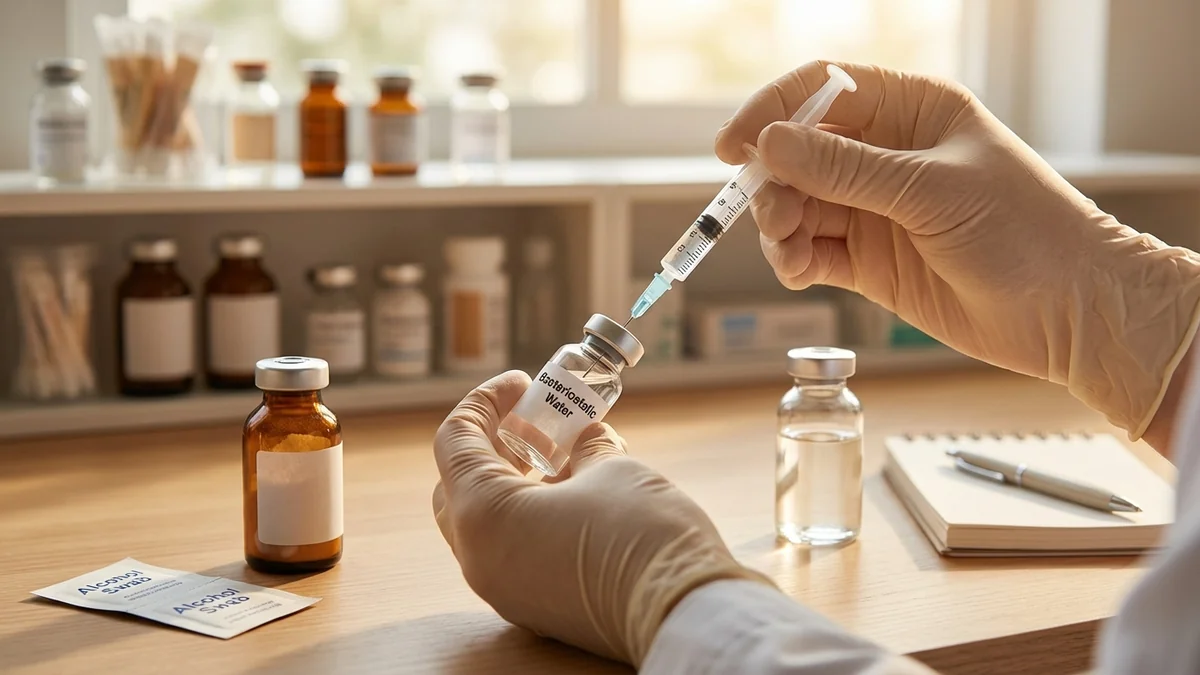
- Bacteriostatic Water (BAC Water): Contains 0.9% benzyl alcohol, acting as a preservative and allowing for multiple uses from a single vial.
- Alcohol Swabs: Essential for cleaning vial tops to prevent contamination.
- Syringes: Typically 29-31 gauge insulin syringes are used for drawing and injecting the peptide.
- Lyophilized Complete Peptide Reconstitution Guide Vial: The peptide in its freeze-dried form.
- Sharps Container: For safe disposal of used needles and syringes.
All supplies should be sourced from a licensed pharmacy or medical supplier to ensure quality and safety.
Choosing the Right Diluent
Bacteriostatic Water
Bacteriostatic water is the most common diluent used for peptide reconstitution due to its preservative properties, which inhibit bacterial growth and allow for multiple doses from a single vial.
Sterile Water
Sterile water is free from preservatives and is typically used for single-dose applications, as it does not prevent bacterial contamination once opened.
Sodium Chloride 0.9%
This diluent is sometimes used for specific peptides, depending on the stability and intended use.
For Complete Peptide Reconstitution Guide, bacteriostatic water is recommended due to its ability to maintain the peptide's stability over multiple uses.
Step-by-Step Reconstitution Instructions
- Wash Hands Thoroughly: Begin by washing your hands to reduce the risk of contamination.
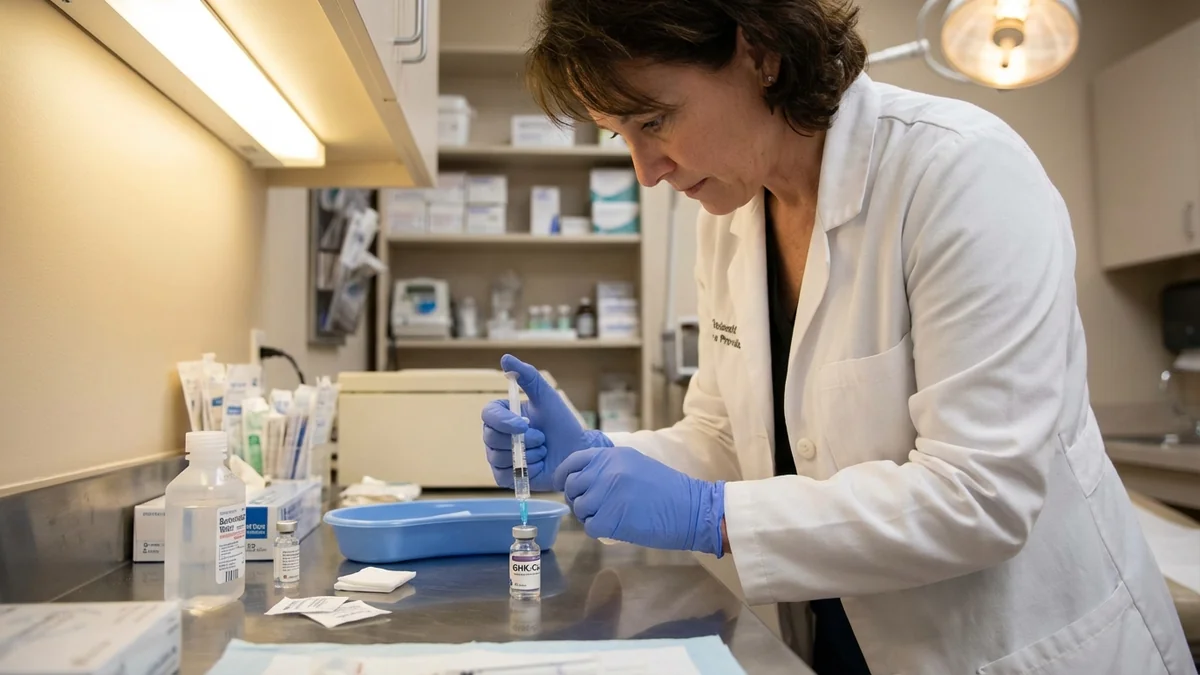
- Clean Vial Tops: Use alcohol swabs to clean the tops of both the peptide vial and the BAC water vial.
- Draw BAC Water: Use a syringe to draw the correct amount of BAC water.
- Insert Needle: Insert the needle into the peptide vial at an angle, aiming at the glass wall.
- Release Water Slowly: Let the water run down the side of the vial without spraying directly onto the powder.
- Gently Swirl: Swirl the vial gently until the powder is completely dissolved. Do not shake.
- Note the Concentration: Calculate the concentration based on the volume of water added.
- Label the Vial: Include the date, peptide name, and concentration on the vial.
- Store Properly: Place the reconstituted peptide in the refrigerator.
Complete Peptide Reconstitution Guide Reconstitution Calculator
To determine the correct dosing, consider the following:
- If the vial contains X mg of Complete Peptide Reconstitution Guide
- And you add Y mL of BAC water
- Then each 0.1 mL (10 units on an insulin syringe) = Z mcg
Example Scenarios
-
Scenario 1: 5 mg vial with 1 mL BAC water
- Concentration: 5000 mcg/mL
- Each 0.1 mL = 500 mcg
-
Scenario 2: 10 mg vial with 2 mL BAC water
- Concentration: 5000 mcg/mL
- Each 0.1 mL = 500 mcg
-
Scenario 3: 2 mg vial with 1 mL BAC water
- Concentration: 2000 mcg/mL
- Each 0.1 mL = 200 mcg
Formula: Desired dose (mcg) ÷ Concentration (mcg/mL) = Volume to inject (mL)
How Much Bacteriostatic Water to Add
Common reconstitution volumes for Complete Peptide Reconstitution Guide include:
- 1 mL: Standard concentration, easy for precise dosing
- 2 mL: Less concentrated, allows for larger injection volume
Choosing the right volume affects the concentration and precision of dosing. Clinics often use 1 mL for ease of calculation and administration.
Storage After Reconstitution
- Temperature: Store in a refrigerator at 36-46°F (2-8°C).
- Light Exposure: Keep away from direct light.
- Shelf Life: Typically 14-28 days with BAC water; single use with sterile water.
- Degradation Signs: Discard if the solution becomes cloudy, has particles, or changes color.
- Freezing: Never freeze reconstituted peptides.
- Travel: Use an insulated bag with ice packs to maintain temperature.