PeptideClinicLocator
Key Takeaways
- Tesofensine is not FDA-approved for any medical use and is available only for research purposes.
- Typical dosing ranges in research settings are between 0.5 mg to 1 mg daily.
- Titration schedules are important to minimize side effects and optimize efficacy.
- Administration is oral, with no reconstitution required, simplifying the dosing process.
- Medical supervision is crucial due to potential side effects and the need for personalized dosing adjustments.
What Is Tesofensine?
Tesofensine is a synthetic small-molecule compound classified as a triple monoamine reuptake inhibitor. It primarily modulates central appetite and metabolic signaling through presynaptic transporter inhibition and hypothalamic regulation. Currently, tesofensine is available for research purposes only and is not FDA-approved for any medical use. For more detailed information, visit the tesofensine profile.
Standard Dosing Protocols
As tesofensine is not FDA-approved, there are no established dosing guidelines for clinical use. However, research studies typically utilize doses ranging from 0.5 mg to 1 mg daily. These doses are based on findings from preclinical studies and early-phase clinical trials (PMID: 20234354). It is crucial to note that these protocols are experimental and should be conducted under strict research settings.
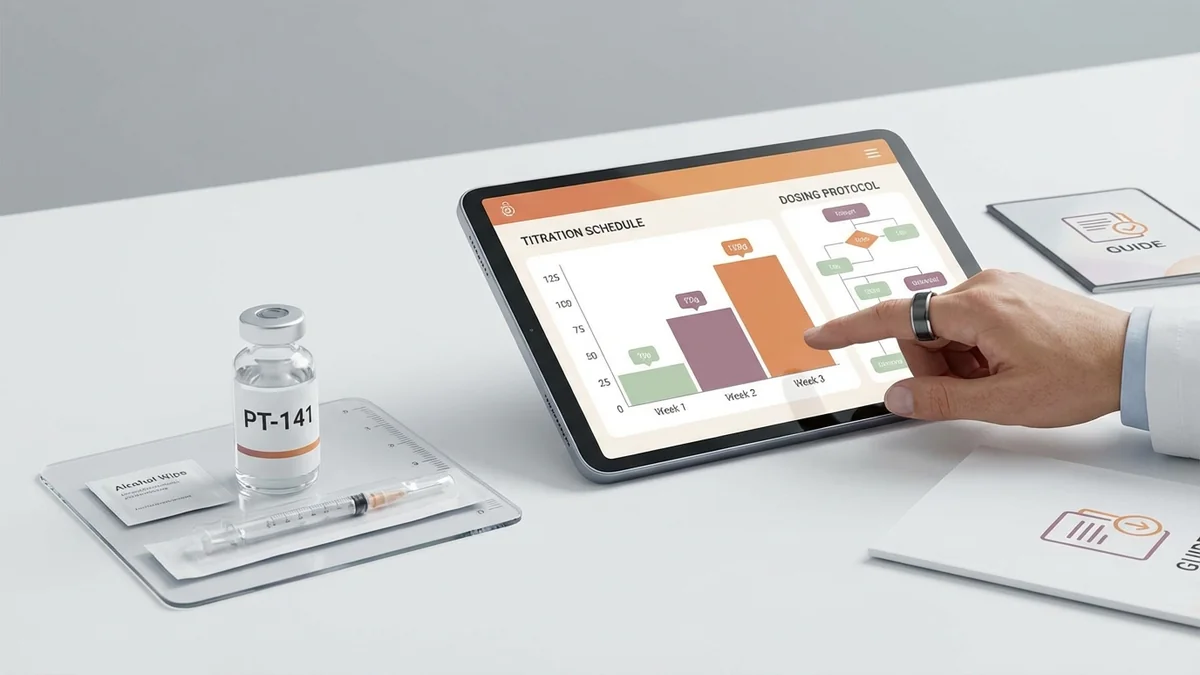
Titration Schedules
In research settings, titration of tesofensine is often employed to enhance tolerability and efficacy. A common titration schedule might involve starting at a lower dose, such as 0.25 mg daily, and gradually increasing to 0.5 mg or 1 mg over several weeks. This gradual increase helps mitigate potential side effects, such as increased heart rate or blood pressure, which are associated with monoamine reuptake inhibitors (PMID: 22439841).
Administration Method
Tesofensine is administered orally, which simplifies its use compared to peptides requiring subcutaneous injection. No reconstitution is necessary, and it is typically taken once daily. Patients or research subjects should follow specific instructions regarding timing relative to meals, as certain foods might affect absorption and efficacy.
Factors That Affect Dosing
Several factors can influence tesofensine dosing, including body weight, treatment goals, and concurrent medications. For instance, individuals with hepatic or renal impairments may require adjusted dosing to avoid potential toxicity. A healthcare provider or researcher must carefully evaluate these factors to tailor dosing appropriately.
What Happens If You Miss a Dose
If a dose of tesofensine is missed, it is generally advised to take it as soon as remembered unless it is close to the time of the next dose. In such cases, the missed dose should be skipped to avoid doubling up, which could increase the risk of adverse effects. This guidance is based on general pharmacological principles and should be confirmed by a supervising medical professional.
Dosing Compared to Similar Peptides
Tesofensine is often compared to other agents targeting obesity and metabolic disorders, such as liraglutide. While liraglutide is a glucagon-like peptide-1 analog administered via injection, tesofensine's oral administration offers a simpler alternative in research settings. However, liraglutide has FDA approval for certain indications, whereas tesofensine does not (PMID: 30014268).
What the Evidence Does Not Show
While early research suggests potential benefits of tesofensine in metabolic studies, significant limitations exist. Long-term safety and efficacy data are lacking, and current studies are primarily preclinical or early-phase. This underscores the importance of conducting further research to establish comprehensive safety profiles (PMID: 29504049).
FAQ
1. How is tesofensine typically administered? Tesofensine is administered orally, usually once daily, without the need for reconstitution.
2. What is the standard dosing range for tesofensine in research? Research protocols typically use doses between 0.5 mg to 1 mg daily, depending on the study's design and objectives.
3. Why is titration important when using tesofensine? Titration helps mitigate side effects and optimize the compound's efficacy by gradually adjusting the dose.
4. Is tesofensine FDA-approved for any use? No, tesofensine is not FDA-approved and is available solely for research purposes.
5. Can tesofensine be compared to other weight management peptides? Yes, it is often compared to peptides like liraglutide, though their administration routes and approval statuses differ.
Medical Disclaimer
This content is for informational purposes only and does not constitute medical advice. Consult a licensed healthcare provider before starting any treatment.
Find a Peptide Therapy Clinic Near You
Browse our directory of verified peptide therapy clinics across the United States. Compare providers, read reviews, and request a consultation.
PeptideClinicLocator.com does not provide medical advice. Always consult a qualified healthcare provider before starting any peptide therapy. Regulatory status may change.