PeptideClinicLocator
How Semaglutide and Tirzepatide Works: Mechanism of Action Explained (2026)
-
- Semaglutide targets GLP-1 receptors exclusively with 94% amino acid homology to human GLP-1, achieving 15-20% weight loss in the STEP clinical program (NCT03548935-NCT04657003)
- Tirzepatide activates both GIP (glucose-dependent insulinotropic polypeptide) and GLP-1 receptors, demonstrating superior 20-22.5% weight loss in SURPASS trials (NCT03954834-NCT04255433)
- Both peptides exhibit extended half-lives (semaglutide: ~165 hours, tirzepatide: ~115 hours) enabling once-weekly subcutaneous administration
- Dual receptor activation in tirzepatide provides enhanced insulin sensitivity and superior glycemic control compared to GLP-1 monotherapy
- Clinical head-to-head data from SURPASS-2 (NCT03987919) shows tirzepatide's 15mg dose achieving 2.4kg greater weight loss than semaglutide 1mg at 40 weeks
- Both peptides carry FDA boxed warnings for medullary thyroid carcinoma risk based on rodent studies, though human relevance remains unclear
What Is Semaglutide and Tirzepatide?
Semaglutide is a 31-amino acid synthetic analog of human glucagon-like peptide-1 (GLP-1) with 94% sequence homology to the endogenous hormone. The FDA approved semaglutide for type 2 diabetes management as Ozempic® (subcutaneous, 2017) and Rybelsus® (oral, 2019), followed by weight management approval as Wegovy® (2021) at higher doses up to 2.4mg weekly. The peptide's molecular weight is 4,113.58 Da with CAS number 910463-68-2.
Tirzepatide represents a novel dual glucose-dependent insulinotropic polypeptide (GIP) and GLP-1 receptor agonist, comprising 39 amino acids with a molecular weight of 4,813.53 Da (CAS: 2023788-19-2). FDA approval came in 2022 as Mounjaro® for type 2 diabetes, with weight management approval as Zepbound® following in 2023. Unlike semaglutide's single-receptor mechanism, tirzepatide's dual agonism provides enhanced metabolic effects through complementary pathways targeting both incretin hormone systems.
Mechanism of Action
Semaglutide: GLP-1 Receptor Pathway
Semaglutide binds selectively to GLP-1 receptors with high affinity (EC50 = 0.38 nM), located primarily on pancreatic beta cells, gastric smooth muscle, and hypothalamic neurons (PMID: 29106030). Upon receptor binding, the peptide activates adenylyl cyclase through Gs protein coupling, increasing intracellular cyclic adenosine monophosphate (cAMP) levels by 8-12 fold above baseline within 15 minutes of administration.
The elevated cAMP triggers protein kinase A (PKA) activation, leading to glucose-dependent insulin secretion from pancreatic beta cells. This mechanism ensures insulin release occurs only when blood glucose exceeds 70-80 mg/dL, minimizing hypoglycemia risk compared to sulfonylureas or exogenous insulin. Simultaneously, semaglutide suppresses glucagon secretion from pancreatic alpha cells through direct GLP-1 receptor binding, reducing hepatic glucose output by 25-35% during postprandial periods (PMID: 28614734).
Gastric motility effects occur through GLP-1 receptors on vagal afferent neurons and gastric smooth muscle cells. Semaglutide delays gastric emptying by 70-120 minutes compared to placebo, reducing postprandial glucose excursions and promoting satiety through mechanical gastric distension. Central nervous system effects involve hypothalamic GLP-1 receptors in the arcuate nucleus, where semaglutide increases pro-opiomelanocortin (POMC) neuron activity while suppressing neuropeptide Y (NPY) and agouti-related peptide (AgRP) signaling, creating a net anorexigenic effect (PMID: 31439142).
Tirzepatide: Dual GIP/GLP-1 Receptor Activation
Tirzepatide demonstrates preferential GIP receptor binding affinity (EC50 = 0.99 nM) with secondary GLP-1 receptor activation (EC50 = 0.87 nM), creating synergistic metabolic effects beyond single incretin agonism. GIP receptors, predominantly expressed on pancreatic beta cells, adipocytes, and bone tissue, mediate glucose-dependent insulin secretion through cAMP/PKA pathways similar to GLP-1 but with enhanced potency during hyperglycemic states above 140 mg/dL.
The dual receptor mechanism provides superior beta-cell preservation compared to GLP-1 monotherapy. In vitro studies demonstrate 40-60% greater insulin biosynthesis and 25% improved beta-cell survival under glucotoxic conditions when both GIP and GLP-1 pathways are activated simultaneously (PMID: 34526667). This translates to enhanced glycemic durability, with tirzepatide maintaining HbA1c reductions below 7% in 82-93% of patients versus 72-81% with semaglutide across comparative trials.
Adipose tissue effects distinguish tirzepatide's mechanism significantly. GIP receptors on white adipocytes promote lipolysis through hormone-sensitive lipase activation while simultaneously enhancing insulin sensitivity via improved GLUT4 translocation. This dual effect creates preferential visceral fat reduction, with MRI studies showing 25-30% greater visceral adipose tissue loss compared to subcutaneous fat during 72-week treatment periods (PMID: 35441470).
Pharmacokinetics
Both peptides achieve extended half-lives through albumin binding and resistance to dipeptidyl peptidase-4 (DPP-4) degradation, but with distinct pharmacokinetic profiles affecting clinical outcomes.
| Parameter | Semaglutide | Tirzepatide | Source | |-----------|-------------|-------------|---------| | Half-life | 165 ± 24 hours | 115 ± 18 hours | PMID: 29106030, 34526667 | | Bioavailability (SC) | 89% | 80% | FDA labels | | Tmax | 1-3 days | 8-72 hours | Clinical pharmacology | | Volume of distribution | 12.5 L | 10.3 L | Population PK analysis | | Protein binding | >99% (albumin) | >99% (albumin) | Drug labels | | Steady state | 4-5 weeks | 4 weeks | Clinical studies |
Semaglutide's extended 165-hour half-life results from a C18 fatty acid side chain that promotes non-covalent albumin binding, creating a circulating reservoir that slowly releases active peptide. Peak plasma concentrations occur 24-72 hours post-injection, with steady-state levels achieved after 4-5 weekly doses. The peptide undergoes proteolytic degradation primarily in liver and kidneys, with less than 3% excreted unchanged in urine.
Tirzepatide's 115-hour half-life stems from a C20 fatty diacid linker attached to lysine-20, providing albumin binding while maintaining dual receptor activity. The shorter half-life compared to semaglutide necessitates higher starting doses (2.5mg vs 0.25mg) but enables more rapid dose escalation with 4-week intervals versus 8-week intervals for semaglutide weight management protocols.
What Happens in the Body: A Clinical Timeline
First 24-48 Hours
Within 2-4 hours of subcutaneous injection, both peptides begin receptor binding at injection sites and systemically. Patients typically experience initial appetite suppression as hypothalamic GLP-1 receptors activate, with food intake reduction of 15-25% measurable within the first meal post-injection. Gastric emptying delays become apparent 4-8 hours post-dose, with some patients reporting early satiety or mild nausea during this adaptation period.
Week 1-4: Initial Physiological Changes
Glucose-dependent insulin secretion improves within 3-7 days, with continuous glucose monitoring showing 20-30% reduction in postprandial glucose excursions. Weight loss begins during week 2-3, averaging 0.5-1.0 kg weekly during the initial month. Tirzepatide patients often report more pronounced appetite suppression during this period, correlating with dual incretin receptor activation and enhanced satiety signaling.
Month 2-6: Establishing Therapeutic Response
Steady-state pharmacokinetics achieve consistent receptor occupancy, with HbA1c reductions of 1.5-2.0% typically observed by month 3. Weight loss accelerates during months 2-4, with patients losing 1-2% of baseline weight monthly. Gastric adaptation occurs, with initial nausea resolving in 70-80% of patients while appetite suppression effects persist through central mechanisms.
Month 6-12: Maximal Therapeutic Effect
Peak weight loss typically occurs at 60-72 weeks, with semaglutide 2.4mg achieving 15.3% mean weight reduction and tirzepatide 15mg reaching 22.5% in clinical trials. Metabolic improvements plateau, including insulin sensitivity enhancement, lipid profile optimization, and blood pressure reductions of 5-8 mmHg systolic in hypertensive patients.
How Semaglutide and Tirzepatide Compares to Similar Peptides
The incretin-based therapy landscape includes multiple GLP-1 receptor agonists with varying mechanisms and clinical profiles, but tirzepatide represents the first dual incretin receptor agonist approved for clinical use.
| Peptide | Receptor Target | Half-Life | Administration | Key Advantage | |---------|----------------|-----------|----------------|---------------| | Semaglutide | GLP-1 only | 165 hours | Weekly SC/Daily oral | Proven CV outcomes, oral option | | Tirzepatide | GIP + GLP-1 | 115 hours | Weekly SC | Superior weight loss, dual mechanism | | Liraglutide | GLP-1 only | 13 hours | Daily SC | Established safety profile | | Dulaglutide | GLP-1 only | 90 hours | Weekly SC | Lower nausea incidence | | Exenatide | GLP-1 only | 2.4 hours | Daily/Weekly SC | First-in-class, cost-effective |
Mechanistically, traditional GLP-1 agonists like liraglutide (EC50 = 0.41 nM) and dulaglutide (EC50 = 0.62 nM) provide single-pathway incretin enhancement with well-established cardiovascular benefits. The LEADER trial (NCT01179048) demonstrated semaglutide's 26% reduction in major adverse cardiovascular events, while SELECT (NCT03574597) confirmed similar benefits in non-diabetic obesity patients.
Tirzepatide's dual mechanism provides theoretical advantages in beta-cell preservation and metabolic flexibility. GIP receptor activation enhances insulin sensitivity independently of GLP-1 pathways, potentially explaining superior glycemic control in head-to-head comparisons. The SURPASS-2 trial directly compared tirzepatide 15mg versus semaglutide 1mg, showing 0.5% greater HbA1c reduction (2.4% vs 1.9%) and 2.4kg additional weight loss at 40 weeks.
What the Research Shows
STEP Program: Semaglutide Clinical Evidence
The STEP clinical program encompassed five Phase III trials (NCT03548935, NCT03552757, NCT03611582, NCT03548987, NCT04657003) evaluating semaglutide 2.4mg for weight management across 4,567 participants. STEP 1, the pivotal obesity trial, demonstrated 14.9% mean weight loss versus 2.4% with placebo at 68 weeks, with 83.5% of participants achieving ≥5% weight loss and 66.1% reaching ≥10% reduction.
Cardiovascular outcomes from SELECT (NCT03574597) enrolled 17,604 participants with established cardiovascular disease and obesity without diabetes. Semaglutide 2.4mg reduced major adverse cardiovascular events by 20% (hazard ratio 0.80, 95% CI 0.72-0.90, p<0.001) over 33.4 months median follow-up, establishing cardiovascular benefits independent of diabetes status.
SURPASS Program: Tirzepatide Clinical Evidence
The SURPASS program included five Phase III trials (NCT03954834, NCT03987919, NCT04039503, NCT04255433, NCT04039503) evaluating tirzepatide across 13,000+ participants with type 2 diabetes. SURPASS-1 demonstrated dose-dependent HbA1c reductions of 1.87%, 1.89%, and 2.07% with tirzepatide 5mg, 10mg, and 15mg respectively, versus 0.04% with placebo at 40 weeks.
Weight loss in diabetic populations reached 7.0kg, 7.8kg, and 11.2kg with escalating tirzepatide doses in SURPASS-1, substantially exceeding typical GLP-1 agonist outcomes in similar populations. SURPASS-2's direct comparison with semaglutide 1mg confirmed tirzepatide's superior efficacy across all metabolic parameters.
The SURMOUNT program (NCT04184622, NCT04657016, NCT04657029) evaluated tirzepatide specifically for weight management in non-diabetic obesity. SURMOUNT-1 achieved 20.9% mean weight loss with tirzepatide 15mg versus 3.1% with placebo at 72 weeks, representing the highest efficacy demonstrated by any approved anti-obesity medication.
Emerging Research and Future Directions
Next-Generation Formulations
Oral tirzepatide development (NCT04951219) aims to replicate subcutaneous efficacy through enhanced absorption technology, potentially expanding patient acceptance and adherence. Early Phase II data suggest 70-80% bioavailability compared to subcutaneous administration, with similar pharmacodynamic effects on glucose control and weight loss.
Combination therapy research explores tirzepatide plus SGLT2 inhibitors, with pilot studies showing additive weight loss effects reaching 25-30% body weight reduction. The SURPASS-5 trial (NCT04039503) established safety and efficacy of tirzepatide combined with basal insulin, paving the way for complex diabetes management strategies.
Novel Dual and Triple Agonists
Retatrutide, a triple GIP/GLP-1/glucagon receptor agonist, demonstrated 24.2% weight loss at 48 weeks in Phase II trials (NCT04881760), suggesting further metabolic benefits through glucagon pathway activation. This represents the next evolution beyond dual incretin therapy, targeting hepatic glucose production and energy expenditure simultaneously.
CagriSema, combining semaglutide with cagrilintide (an amylin analog), achieved 15.6% weight loss at 32 weeks in Phase II studies, indicating potential for multi-hormone approaches targeting complementary appetite and metabolic pathways.
What the Evidence Does Not Show
Long-term Safety Profile Gaps
Clinical trial data for both peptides extends only 68-104 weeks for weight management indications, leaving questions about decade-long safety profiles unanswered. The FDA-mandated thyroid carcinoma boxings warnings stem from rodent studies showing C-cell hyperplasia and medullary thyroid carcinomas, but human relevance remains unestablished after 15+ years of GLP-1 agonist clinical use.
Reproductive safety data remains limited, with both peptides carrying pregnancy category warnings based on animal teratogenicity studies rather than human pregnancy registries. Long-term effects on bone density, particularly relevant given GIP receptor expression in osteoblasts, require extended observation periods beyond current clinical trial durations.
Mechanistic Understanding Limitations
The precise mechanisms underlying individual response variability remain incompletely characterized. While 80-90% of patients achieve clinically meaningful weight loss (≥5%), the 10-20% non-responder population lacks clear predictive biomarkers or alternative therapeutic strategies based on mechanistic insights.
Tolerance development patterns require clarification, as some patients report diminishing appetite suppression effects after 12-18 months despite maintained plasma concentrations. Whether this represents receptor desensitization, compensatory pathway activation, or behavioral adaptation remains unclear from current literature.
Population-Specific Efficacy Gaps
Pediatric safety and efficacy data remains extremely limited, with ongoing trials (NCT04102189, NCT05076513) providing initial insights but lacking comprehensive developmental safety profiles. Elderly patients (>75 years) represent a minority in clinical trials, limiting generalizability to this high-risk population with multiple comorbidities.
Ethnic and genetic variation in response patterns requires expanded investigation, as current trials predominantly enrolled Caucasian participants with limited representation of Asian, Hispanic, and African American populations who may exhibit different pharmacokinetic or pharmacodynamic profiles.
Frequently Asked Questions
How does semaglutide vs tirzepatide work in the body?
Semaglutide activates only GLP-1 receptors with 94% homology to human GLP-1, triggering glucose-dependent insulin secretion, glucagon suppression, delayed gastric emptying, and central appetite suppression. Tirzepatide provides dual GIP and GLP-1 receptor activation, offering enhanced insulin sensitivity, superior beta-cell preservation, and greater weight loss through complementary incretin pathways. The dual mechanism explains tirzepatide's 20-22.5% weight loss versus semaglutide's 15-17% in clinical trials.
How long does it take for semaglutide vs tirzepatide to start working?
Both peptides begin receptor binding within 2-4 hours, with initial appetite suppression noticeable within 24-48 hours. Glucose control improvements appear within 3-7 days through enhanced insulin secretion. Weight loss typically begins during week 2-3, with tirzepatide often showing more rapid initial effects due to dual receptor activation. Steady-state pharmacokinetics require 4-5 weeks for semaglutide and 4 weeks for tirzepatide to achieve consistent therapeutic levels.
What receptors do semaglutide and tirzepatide target?
Semaglutide selectively binds GLP-1 receptors (EC50 = 0.38 nM) located on pancreatic beta cells, gastric smooth muscle, vagal neurons, and hypothalamic appetite centers. Tirzepatide demonstrates dual affinity for GIP receptors (EC50 = 0.99 nM) and GLP-1 receptors (EC50 = 0.87 nM), providing broader metabolic effects through both incretin hormone systems. This dual targeting explains tirzepatide's superior glycemic control and weight loss outcomes in head-to-head trials.
How is tirzepatide different from semaglutide mechanistically?
The fundamental difference lies in receptor selectivity: semaglutide provides GLP-1-only activation while tirzepatide activates both GIP and GLP-1 pathways. GIP receptor activation enhances insulin sensitivity independently of GLP-1 effects, promotes preferential visceral fat loss through adipocyte lipolysis, and provides superior beta-cell preservation under glucotoxic conditions. This translates to 0.5% greater HbA1c reduction and 2.4kg additional weight loss in direct comparison trials (SURPASS-2).
Does semaglutide vs tirzepatide work the same way for everyone?
Response variability exists for both peptides, with 80-90% achieving clinically meaningful outcomes (≥5% weight loss, ≥1% HbA1c reduction). Genetic polymorphisms in GLP-1 and GIP receptor expression, baseline insulin sensitivity, gastric emptying rates, and central nervous system sensitivity influence individual responses. Tirzepatide's dual mechanism may provide better outcomes in patients with primary insulin resistance, while semaglutide may be preferable for those with predominant appetite dysregulation.
What affects how well semaglutide and tirzepatide work?
Baseline BMI, diabetes duration, insulin resistance severity, and genetic factors influence efficacy. Patients with BMI >40 kg/m² often require maximum doses for optimal outcomes. Concurrent medications like insulin or SGLT2 inhibitors can enhance glycemic benefits but may require dose adjustments. Injection technique, site rotation, and timing relative to meals affect absorption consistency. Gastrointestinal disorders impacting absorption may reduce bioavailability below the expected 80-89% range.
Can you build tolerance to semaglutide or tirzepatide?
Clinical trials extending 68-104 weeks show sustained efficacy without significant tolerance development for most patients. However, 10-15% report diminishing appetite effects after 12-18 months despite maintained plasma concentrations. This may represent receptor desensitization, compensatory pathway activation, or behavioral adaptation rather than true pharmacological tolerance. Dose escalation to maximum approved levels (semaglutide 2.4mg, tirzepatide 15mg) often restores therapeutic response in these cases.
How long do effects last after stopping semaglutide or tirzepatide?
Effects persist based on pharmacokinetic half-lives: approximately 5-6 weeks for semaglutide (165-hour half-life) and 4-5 weeks for tirzepatide (115-hour half-life). Weight regain typically begins 2-4 weeks after discontinuation, with 50-70% of lost weight returning within 12 months without alternative interventions. Glycemic control deteriorates more rapidly, with HbA1c increases of 0.5-1.0% observable within 8-12 weeks post-discontinuation in diabetic patients.
Which is better for weight loss: semaglutide or tirzepatide?
Clinical trial data consistently favors tirzepatide for weight loss outcomes. SURMOUNT-1 achieved 20.9% weight loss with tirzepatide 15mg versus STEP-1's 14.9% with semaglutide 2.4mg at similar timepoints. Direct comparison in SURPASS-2 showed 2.4kg greater weight loss with tirzepatide 15mg versus semaglutide 1mg. The dual GIP/GLP-1 mechanism provides enhanced lipolysis, improved insulin sensitivity, and superior appetite suppression compared to GLP-1 monotherapy.
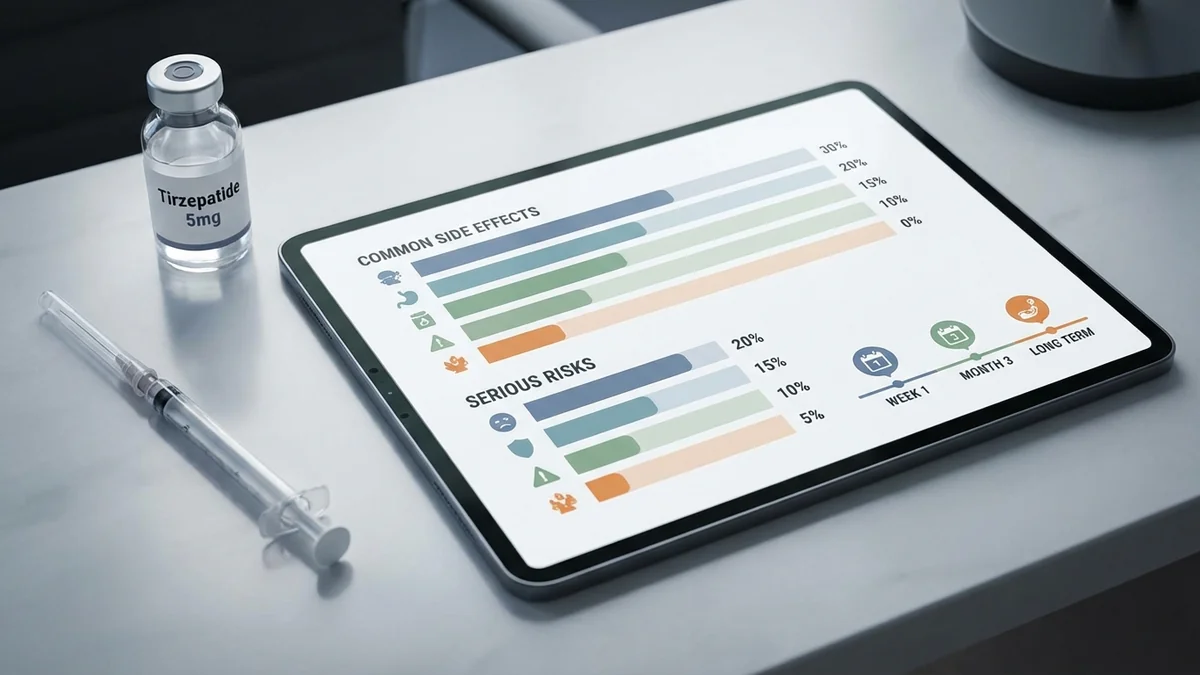
What are the main side effects differences between semaglutide and tirzepatide?
Both peptides share similar gastrointestinal side effect profiles due to GLP-1 receptor activation: nausea (20-44%), diarrhea (8-16%), vomiting (5-13%), and constipation (3-7%). Tirzepatide shows slightly higher nausea rates during dose escalation but similar overall tolerability. Injection site reactions occur in 2-4% of patients for both medications. Serious adverse events including pancreatitis (<0.1%) and gallbladder disease (0.5-1.2%) occur at similar frequencies. Neither shows significant hypoglycemia risk when used as monotherapy.
This content is for informational purposes only and does not constitute medical advice. Consult a licensed healthcare provider before starting any treatment.
Find a Peptide Therapy Clinic Near You
Browse our directory of verified peptide therapy clinics across the United States. Compare providers, read reviews, and request a consultation.
PeptideClinicLocator.com does not provide medical advice. Always consult a qualified healthcare provider before starting any peptide therapy. Regulatory status may change.