PeptideClinicLocator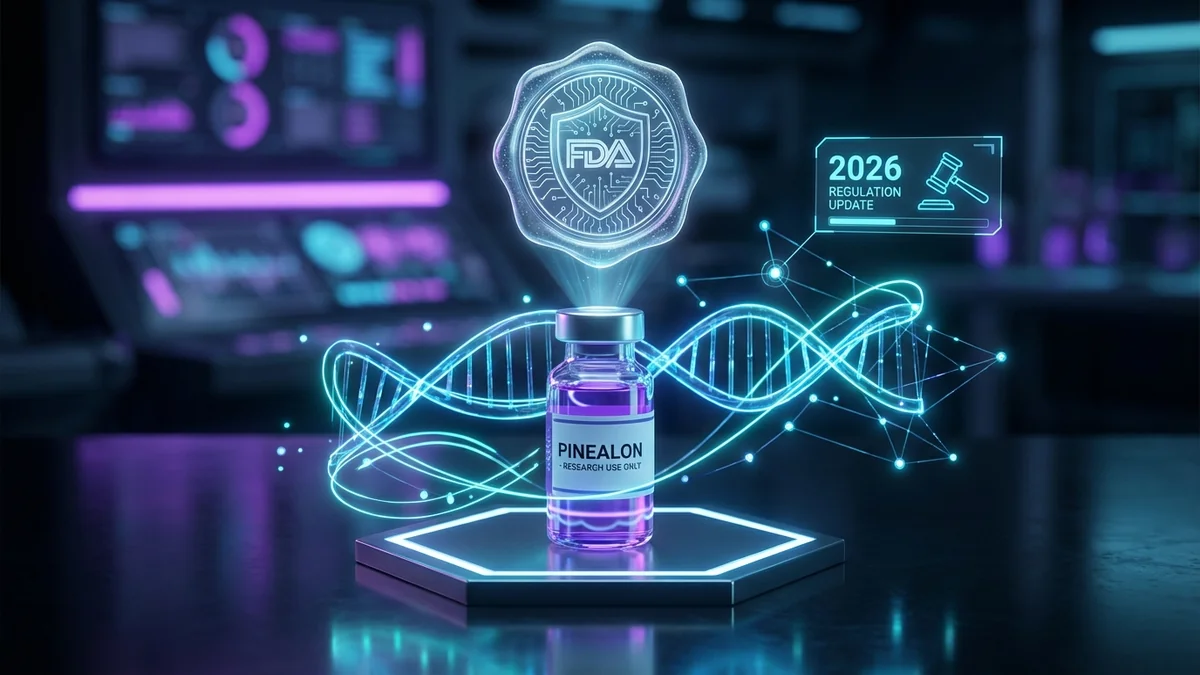
Key Takeaways
- Pinealon is not FDA-approved and is available for research purposes only.
- It cannot be compounded by 503A or 503B pharmacies due to its Category 2 designation.
- No specific DOJ prosecutions or FDA warning letters have been issued for Pinealon.
- Pinealon is not available by prescription or over-the-counter; it is sold for research use only.
- Patients should verify clinic legality and be aware of state-level regulatory differences.
Current FDA Status
Pinealon is currently classified as a research-only peptide and is not approved by the FDA for any medical indications. It is not listed on the FDA's bulk drug substance list for compounding, which means it falls under Category 2. This classification indicates that Pinealon is not permissible for compounding due to insufficient safety and efficacy data. For further details, refer to the Federal Register notice on bulk drug substances.
Compounding Status
Pinealon cannot be compounded by 503A or 503B pharmacies. This restriction is due to its Category 2 designation, which highlights concerns regarding the safety and efficacy of the peptide. The FDA has not recognized any conditions under which Pinealon can be compounded legally, as it lacks the necessary data to support its use in compounded formulations.
Enforcement Actions
As of February 2026, there have been no specific Department of Justice (DOJ) prosecutions or FDA warning letters directly related to Pinealon. However, the FDA continues to monitor and enforce regulations concerning the sale and use of unapproved peptides. Clinics or entities found to be distributing Pinealon outside of research contexts may face regulatory actions.
Prescription vs. Over-the-Counter vs. Research Use
Pinealon is not available by prescription or over-the-counter. It is legally sold for research use only, meaning it is intended for laboratory research purposes and not for human consumption. "Research use only" signifies that the peptide should not be used in clinical practice or for self-administration by patients.
State-Level Variations
While federal regulations govern the overall legality of Pinealon, some states may have specific laws or enforcement practices that impact its availability. Patients and researchers should consult state-specific regulations to ensure compliance with local laws.
What "Off-Label" Actually Means
The term "off-label" applies exclusively to FDA-approved drugs used for non-approved indications. Since Pinealon has never received FDA approval, its use cannot be considered off-label. Prescribing Pinealon equates to prescribing an unapproved drug, which is not legally permissible for clinical use.
What This Means for Patients
Patients interested in Pinealon should be cautious and ensure that any clinic they engage with operates legally. Verify that the clinic adheres to FDA regulations and does not offer Pinealon for clinical use. Red flags include clinics promoting Pinealon as a treatment for specific conditions without FDA approval or evidence-based support.
Legal Alternatives
For those seeking legal alternatives to Pinealon, peptides such as Cerebrolysin and Semax have been investigated for similar neuroprotective properties. It is essential to consult with a licensed healthcare provider to explore legal and safe treatment options.
FAQ
Is Pinealon banned by WADA?
As of the latest update, Pinealon is not specifically listed on the World Anti-Doping Agency (WADA) prohibited list. However, athletes should consult the most current WADA regulations to ensure compliance.
Can Pinealon be prescribed by a doctor?
No, Pinealon cannot be prescribed by a doctor as it is not FDA-approved for any medical use and is available for research purposes only.
What are the risks of using Pinealon without FDA approval?
Using Pinealon without FDA approval carries risks, including potential safety concerns and legal repercussions. It is crucial to adhere to regulatory guidelines and consult healthcare professionals.
Are there any legal actions against clinics using Pinealon?
Currently, there are no specific legal actions against clinics using Pinealon, but the FDA monitors compliance with regulations, and unauthorized use could lead to enforcement actions.
How can I ensure a clinic is operating legally with peptides?
Verify that the clinic follows FDA guidelines, does not offer unapproved peptides for clinical use, and consults licensed healthcare providers for legal treatment options.
Medical Disclaimer: This content is for informational purposes only and does not constitute medical advice. Consult a licensed healthcare provider before starting any treatment. Legal status can change and was last verified February 2026.
Find a Peptide Therapy Clinic Near You
Browse our directory of verified peptide therapy clinics across the United States. Compare providers, read reviews, and request a consultation.
PeptideClinicLocator.com does not provide medical advice. Always consult a qualified healthcare provider before starting any peptide therapy. Regulatory status may change.