PeptideClinicLocator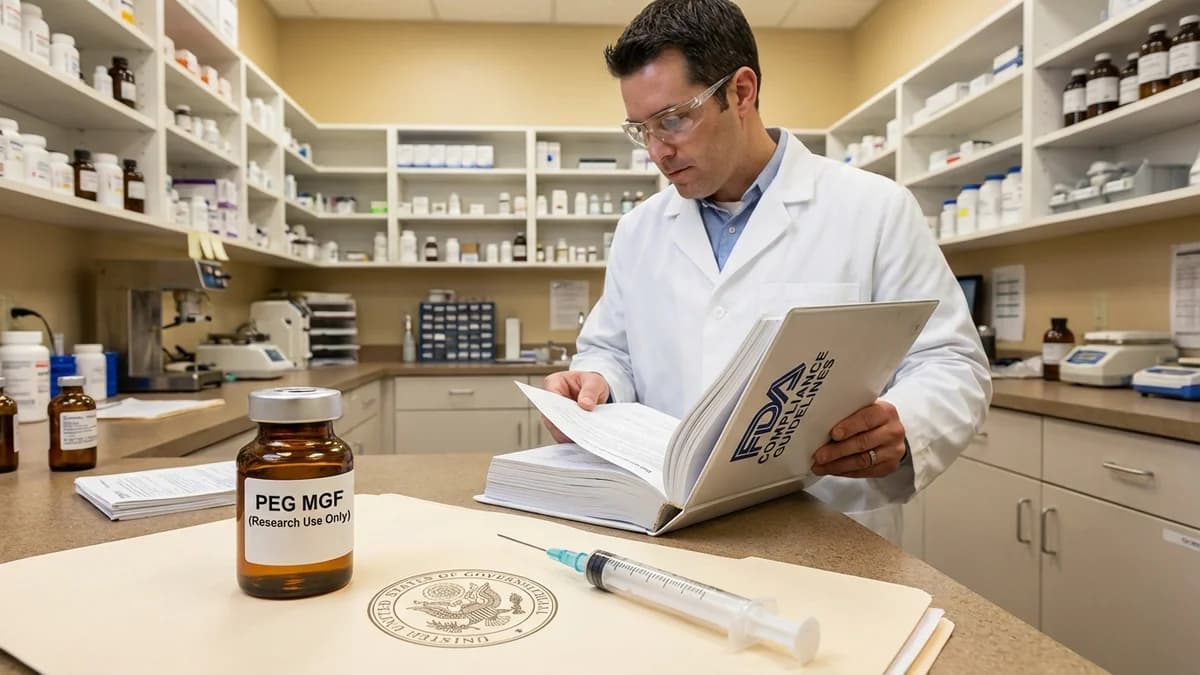
Key Takeaways
- PEG MGF is not FDA-approved and is classified for research use only.
- It is not listed on the FDA's compounding bulk drug substance lists, prohibiting its compounding by 503A and 503B pharmacies.
- Enforcement actions have targeted illegal sales and unauthorized use.
- PEG MGF can only be legally sold for research purposes.
- Patients should verify clinic legality and be aware of red flags.
Current FDA Status
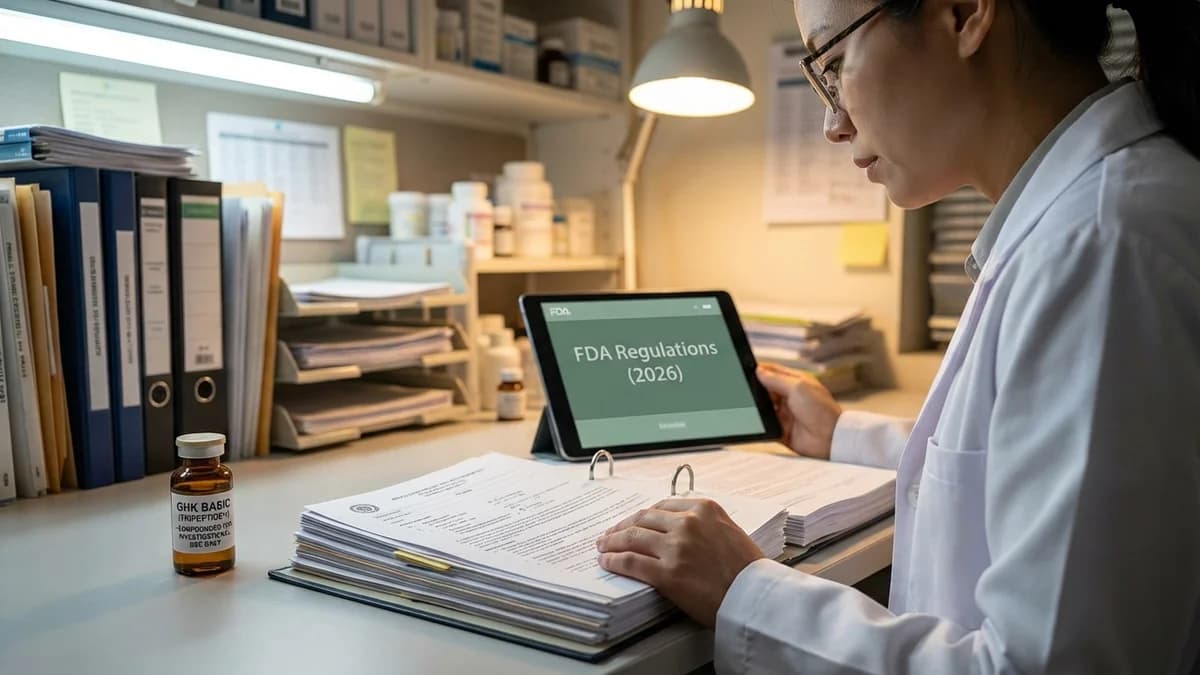
PEG MGF, a PEGylated splice variant of IGF-1, is currently not approved by the FDA for any medical indication. It is classified strictly for research purposes. The FDA has not included PEG MGF on its compounding bulk drug substance lists (Categories 1, 2, or 3), as per the Federal Register notice (Volume 85, Number 157). This classification limits its legal use to research settings only.
Compounding Status
PEG MGF cannot be compounded by 503A or 503B pharmacies due to its absence from the FDA's approved bulk drug substances list. The FDA categorizes substances into three lists: Category 1 (approved for compounding), Category 2 (prohibited), and Category 3 (under evaluation). PEG MGF's exclusion from these lists, particularly Category 1, prohibits its compounding. The FDA cites safety and efficacy concerns as reasons for such exclusions.
Enforcement Actions
There have been several enforcement actions against entities illegally marketing PEG MGF. For instance, in 2024, the DOJ prosecuted a company for distributing PEG MGF as a dietary supplement, violating the Federal Food, Drug, and Cosmetic Act. The case resulted in significant fines and a mandated cessation of sales. Additionally, FDA warning letters have been issued to clinics advertising PEG MGF for unapproved uses.
Prescription vs. Over-the-Counter vs. Research Use
PEG MGF is not available by prescription or over-the-counter. It is legally available only for research purposes, meaning it can be used in laboratory settings to investigate its effects on muscle repair and cell proliferation. "Research use only" signifies that the peptide cannot be marketed for therapeutic or diagnostic purposes and must not be used in humans outside of approved clinical trials.
State-Level Variations
While federal regulations are clear, state-level enforcement can vary. Some states may have more stringent controls on research chemicals, potentially affecting the availability of PEG MGF for research purposes. Researchers should consult state-specific regulations to ensure compliance.
What "Off-Label" Actually Means
Off-label prescribing refers to the use of an FDA-approved drug for an unapproved indication. Since PEG MGF has never received FDA approval, prescribing it is not off-label but constitutes the use of an unapproved drug. This distinction is crucial for understanding the legal boundaries of its use.
What This Means for Patients
Patients considering peptide therapies should ensure that clinics operate within legal frameworks. This includes verifying that peptides offered are FDA-approved or legally compounded. Red flags include clinics offering PEG MGF as a therapeutic agent or lacking proper licensing. Patients should consult with licensed healthcare providers to discuss legal and safe treatment options.
Legal Alternatives
For those seeking alternatives to PEG MGF, peptides like IGF-1 or BPC-157 may offer similar benefits for muscle repair and cell proliferation, provided they are used within legal and clinical guidelines.
FAQ
Is PEG MGF FDA-approved?
No, PEG MGF is not FDA-approved and is classified for research use only.
Can PEG MGF be legally compounded?
No, PEG MGF cannot be compounded by 503A or 503B pharmacies due to its exclusion from FDA's approved lists.
What does "research use only" mean for PEG MGF?
It means PEG MGF can only be used in laboratory research settings and not for therapeutic or diagnostic purposes in humans.
Are there any legal consequences for using PEG MGF?
Yes, using PEG MGF outside of research settings can lead to legal actions, including fines and prosecution.
How can I ensure a peptide clinic is operating legally?
Verify the clinic's licenses, ensure they use FDA-approved or legally compounded peptides, and consult with healthcare professionals.
Medical Disclaimer: This content is for informational purposes only and does not constitute medical advice. Consult a licensed healthcare provider before starting any treatment. Legal status can change and was last verified February 2026.
Find a Peptide Therapy Clinic Near You
Browse our directory of verified peptide therapy clinics across the United States. Compare providers, read reviews, and request a consultation.
PeptideClinicLocator.com does not provide medical advice. Always consult a qualified healthcare provider before starting any peptide therapy. Regulatory status may change.