PeptideClinicLocator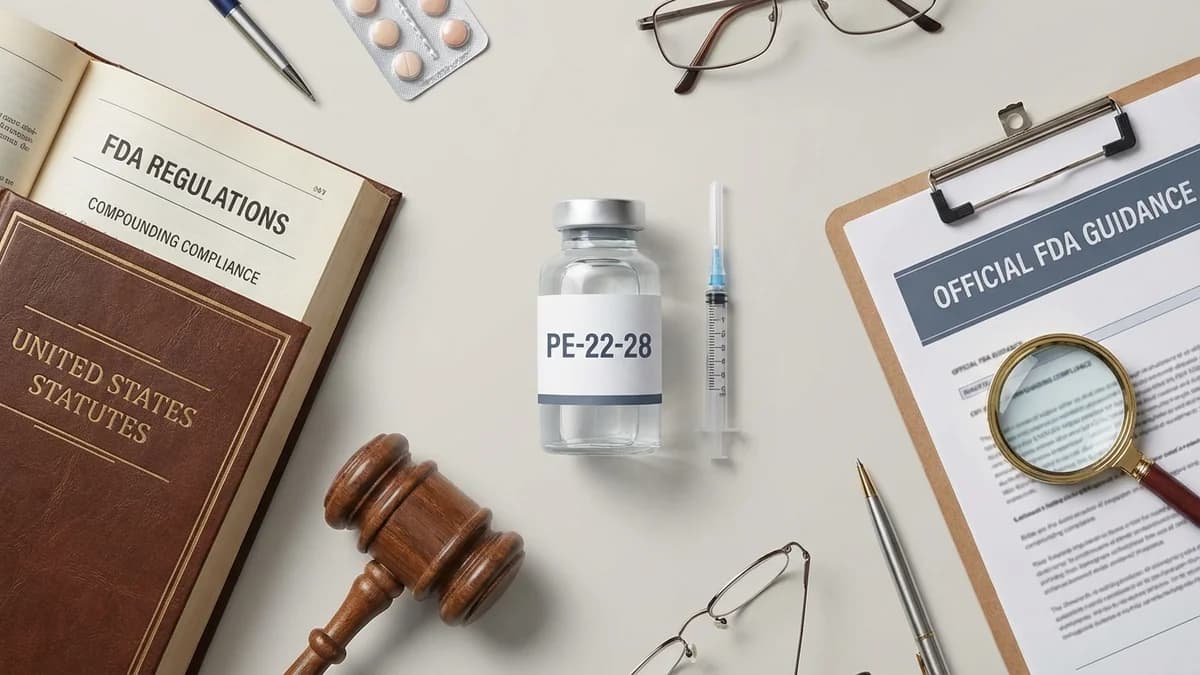
Key Takeaways
- PE-22-28 is not FDA-approved and is available for research purposes only.
- It is not listed on the FDA's compounding bulk drug substance list, restricting its use in pharmacy compounding.
- The peptide is primarily used in research for synaptic plasticity and neuroprotection.
- Patients should verify clinic legality and watch for red flags when considering treatment involving PE-22-28.
Current FDA Status
PE-22-28 is currently categorized as a research-only peptide and is not FDA-approved for any clinical use. The peptide is derived from the C-terminal fragment of pituitary adenylyl cyclase-activating polypeptide (PACAP 1–38), focusing on synaptic plasticity and neurotrophic modulation. As of the latest update, PE-22-28 is not included in the FDA's compounding bulk drug substance list, as per the Federal Register notice (84 FR 4696), indicating it cannot be compounded by 503A or 503B pharmacies for clinical use.
Compounding Status
Due to its absence from the FDA's compounding bulk drug substance list (Categories 1, 2, or 3), PE-22-28 cannot be legally compounded by pharmacies operating under sections 503A or 503B of the Federal Food, Drug, and Cosmetic Act. This restriction is largely due to the peptide's classification as a research-only substance, with insufficient safety and efficacy data to support its clinical use.
Enforcement Actions
There have been no specific DOJ prosecutions or FDA warning letters directly related to PE-22-28 as of the latest reports. However, the FDA continues to monitor the sale and distribution of unapproved peptides, which may lead to enforcement actions if PE-22-28 is found to be marketed for clinical use without appropriate authorization.
Prescription vs. Over-the-Counter vs. Research Use
PE-22-28 is not available by prescription or over-the-counter. It is strictly available for research use only, which legally means it can be used in laboratory settings for experimental purposes and not for human consumption or therapeutic application. "Research use only" implies that the peptide should not be marketed or used as a treatment in clinical settings.
State-Level Variations
Currently, there are no known state-level regulations that specifically alter the federal status of PE-22-28. However, state boards of pharmacy may have varying levels of enforcement regarding the use of research-only substances, and practitioners should be aware of local regulations.
What "Off-Label" Actually Means
The concept of off-label prescribing applies exclusively to FDA-approved drugs. Since PE-22-28 has never received FDA approval, it cannot be prescribed off-label. Any clinical use of PE-22-28 is considered the administration of an unapproved drug, which is illegal under current FDA regulations.
What This Means for Patients
Patients considering treatments involving PE-22-28 should be cautious and ensure that any clinic offering such services is operating within legal boundaries. Red flags include promises of therapeutic benefits without scientific backing or clinics claiming to prescribe PE-22-28 for off-label uses. Verifying the clinic's credentials and seeking advice from a licensed healthcare provider is crucial.
Legal Alternatives
For patients interested in the neuroprotective and synaptic plasticity effects similar to those studied in PE-22-28, legal alternatives such as semaglutide or other FDA-approved peptides may be considered. These alternatives have undergone rigorous testing and are approved for certain indications.
FAQ
Is PE-22-28 FDA-approved?
No, PE-22-28 is not FDA-approved and is available solely for research purposes.
Can PE-22-28 be compounded by pharmacies?
No, PE-22-28 cannot be compounded by pharmacies as it is not listed on the FDA's compounding bulk drug substance list.
What does "research use only" mean for PE-22-28?
"Research use only" indicates that PE-22-28 can be used in laboratory settings for experimental studies but not for human treatment or consumption.
Are there any enforcement actions against PE-22-28?
As of now, there have been no specific enforcement actions against PE-22-28, but the FDA monitors the distribution of unapproved peptides.
What should patients look for when considering peptide treatments?
Patients should verify the legality of the clinic, ensure the peptide is FDA-approved for their condition, and consult with a licensed healthcare provider.
This content is for informational purposes only and does not constitute medical advice. Consult a licensed healthcare provider before starting any treatment. Legal status can change; this information was last verified in February 2026.
Find a Peptide Therapy Clinic Near You
Browse our directory of verified peptide therapy clinics across the United States. Compare providers, read reviews, and request a consultation.
PeptideClinicLocator.com does not provide medical advice. Always consult a qualified healthcare provider before starting any peptide therapy. Regulatory status may change.