Key Takeaways
- GHK-Cu is not FDA-approved and is available for research purposes only.
- Clinical studies suggest improvements in skin remodeling and wound healing.
- Patients typically notice effects within 1 to 3 months of consistent use.
- Results can vary based on individual factors such as dosing compliance and lifestyle.
- GHK-Cu may not work for everyone, particularly those with contraindications.
What Is GHK-Cu (Copper Peptide)?
GHK-Cu, a research peptide, consists of a naturally occurring tripeptide-copper(II) complex. It plays a role in extracellular matrix regulation, redox homeostasis, and collagen synthesis. For more detailed information, visit the GHK-Cu (Copper Peptide) profile.
What Clinical Trials Show
Clinical research on GHK-Cu is primarily preclinical, with studies highlighting its potential in skin regeneration and wound healing. The peptide has been shown to stimulate collagen synthesis and modulate metalloproteinase activity (PMID 26236730). In vitro and in vivo studies suggest GHK-Cu promotes skin remodeling and has anti-inflammatory properties (PMID 35083444). However, there are no large-scale Phase III trials confirming these outcomes.
Realistic Timeline
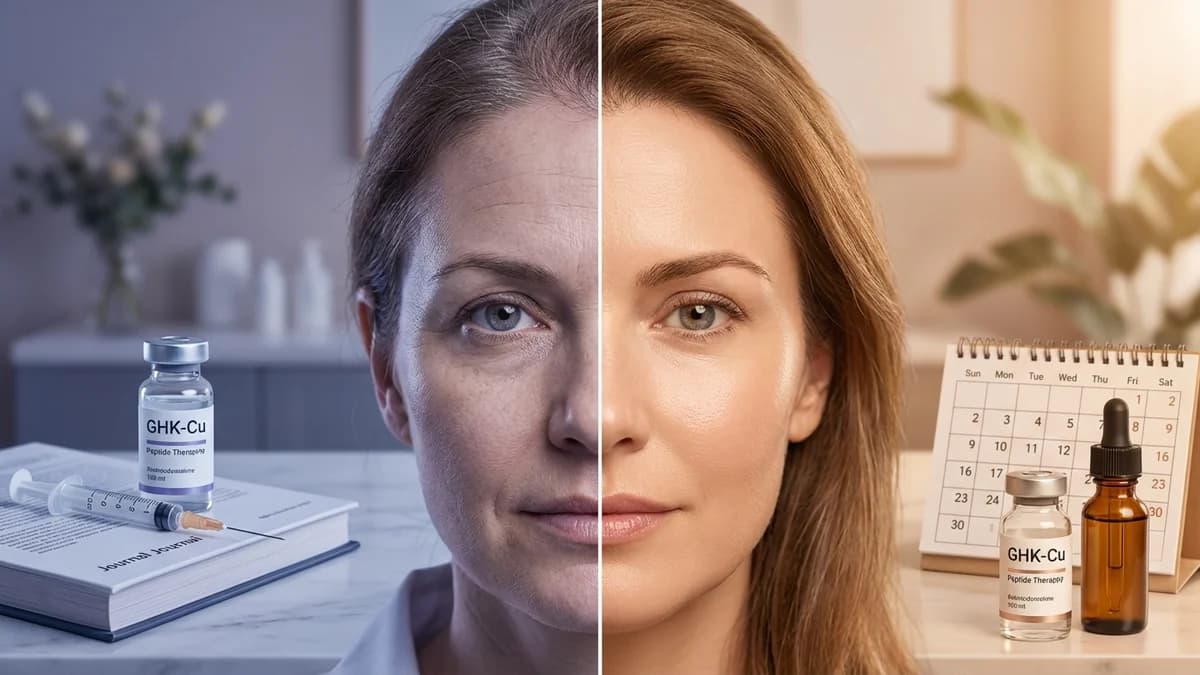
Patients using GHK-Cu may start noticing changes in skin texture and wound healing within 1 to 3 months, based on preclinical data. Initial effects, such as improved skin hydration, may be observed within the first few weeks. By 3 months, many users report enhanced skin elasticity and reduced fine lines. Long-term effects beyond 6 months are not well-documented in clinical settings.
Factors That Affect Results
Several factors can influence the outcomes of GHK-Cu therapy:
- Dosing Compliance: Consistent application is crucial for observing benefits.
- Diet and Exercise: A healthy lifestyle may enhance the peptide's effects.
- Underlying Conditions: Conditions like diabetes can affect skin healing.
- Concurrent Medications: Some medications may interact with peptide efficacy.
- Individual Variation: Genetic factors can lead to different responses.
What Results Look Like in Practice
Many patients using GHK-Cu report improvements in skin appearance and faster wound healing. Clinical data suggests that the peptide can enhance collagen production and reduce inflammation (PMID 35083444). However, results may vary, and not all users will experience significant changes.
Results Compared to Alternatives
Compared to other peptides like Matrixyl or non-peptide treatments such as retinoids, GHK-Cu offers a unique mechanism by influencing gene expression and metalloprotein activity. While retinoids are FDA-approved for anti-aging, GHK-Cu's benefits are primarily supported by preclinical research (PMID 26236730).
When GHK-Cu (Copper Peptide) May Not Work
GHK-Cu may not be effective for everyone. Non-responders often have underlying health issues or use the peptide inconsistently. Contraindications include hypersensitivity to copper. In such cases, alternative therapies or peptides may be more suitable.
What the Evidence Does Not Show
Long-term outcomes of GHK-Cu use remain unclear due to limited human studies. The peptide's effects in populations with chronic skin conditions or systemic diseases are not well-studied. Current research primarily focuses on short-term skin and wound healing effects (PMID 35083444).
FAQ
What are the primary benefits of GHK-Cu?
GHK-Cu is primarily studied for its role in skin remodeling and wound healing, as it promotes collagen synthesis and has anti-inflammatory effects.
How long does it take to see results from GHK-Cu?
Users typically notice improvements within 1 to 3 months, although initial changes may be seen within weeks.
Are there any side effects associated with GHK-Cu?
Common side effects are not well-documented, but hypersensitivity reactions to copper may occur in some individuals.
Can GHK-Cu be used with other skin treatments?
Yes, but it's important to consult a healthcare provider to ensure no adverse interactions occur.
Is GHK-Cu suitable for all skin types?
While generally considered safe, individuals with copper allergies should avoid its use.
This content is for informational purposes only and does not constitute medical advice. Consult a licensed healthcare provider before starting any treatment.