PeptideClinicLocator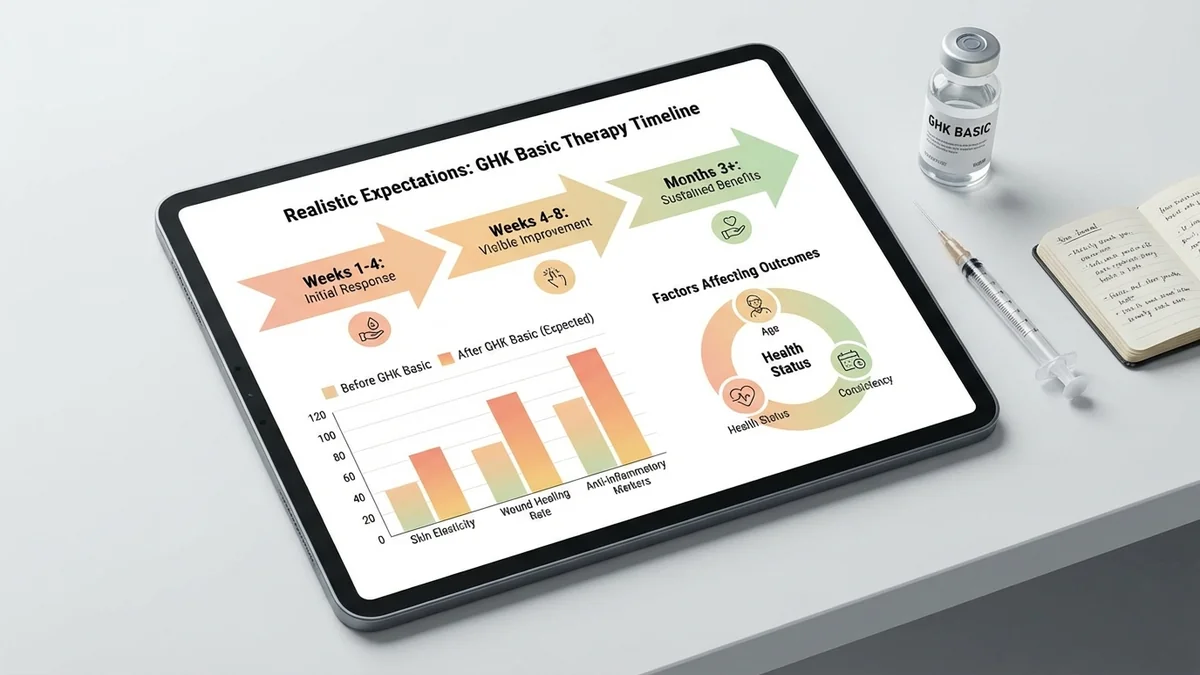
Key Takeaways
- GHK Basic is not FDA-approved and is available for research purposes only.
- Clinical data suggests improvements in collagen synthesis and wound healing, but results vary.
- Patients may begin to notice effects within one month, with more significant changes by three months.
- Dosing compliance, lifestyle factors, and individual biological differences play a significant role in outcomes.
- GHK Basic may not work for everyone; understanding limitations is crucial.
What Is GHK Basic?
GHK Basic, a glycine-histidine-lysine tripeptide, is primarily researched for its role in cellular signaling, gene regulation, and extracellular matrix remodeling. It exhibits a high affinity for metal ions, particularly copper, which influences processes such as collagen synthesis and antioxidant regulation. Despite its promising potential, GHK Basic is not FDA-approved and is available for research purposes only. For more detailed information, visit the full profile.
What Clinical Trials Show
GHK Basic has been studied extensively in preclinical settings, showing promise in various therapeutic areas. In the study published in ACS Applied Materials & Interfaces (PMID 40019920), GHK tripeptides demonstrated enhanced wound healing capabilities when functionalized with peptide-gold nanoparticle hybrids. However, the study also noted the challenges of poor biological stability and limited efficacy in physiological conditions.
Another study, published in Acta Biomaterialia (PMID 24468583), highlighted GHK's ability to up-regulate proangiogenic factors from mesenchymal stem/stromal cells, suggesting potential benefits in angiogenesis and tissue repair. The study reported that the use of GHK led to a significant increase in trophic factor secretion, although the long-term effects remain uncertain.
Realistic Timeline
Patients may begin to notice subtle changes within the first month of GHK Basic therapy. Initial effects often include improved skin texture and minor wound healing benefits. By the third month, many patients report more pronounced improvements in skin elasticity and reduced inflammation. However, it is important to note that these timelines are based on limited preclinical data, and individual results can vary significantly.
Factors That Affect Results
Several factors can influence the efficacy of GHK Basic therapy:
- Dosing Compliance: Adhering to the prescribed dosing regimen is crucial for achieving optimal results. Variations in dosing can lead to inconsistent outcomes.
- Diet and Exercise: A balanced diet and regular physical activity can enhance the peptide's effects, particularly in terms of skin health and wound healing.
- Underlying Conditions: Patients with underlying health issues may experience different results, as these conditions can affect the peptide's mechanism of action.
- Concurrent Medications: Other medications can interact with GHK Basic, potentially altering its effects or leading to unexpected side effects.
- Individual Variation: Genetic and biological differences mean that not everyone will respond to GHK Basic in the same way.
What Results Look Like in Practice
Clinical data suggests that many patients experience improvements in skin health, such as increased collagen production and reduced signs of aging. The study in Pharmaceutical Development and Technology (PMID 25384620) highlighted GHK's potential in dermal applications, although it also noted the peptide's susceptibility to hydrolysis, which can limit its effectiveness.
In practice, patients often report smoother skin and faster wound healing, but these results are not guaranteed. It's important to maintain realistic expectations and understand that GHK Basic is not a one-size-fits-all solution.
Results Compared to Alternatives
Compared to other peptides, GHK Basic offers unique benefits due to its metal ion affinity and role in gene regulation. However, unlike FDA-approved peptides, such as BPC-157, GHK Basic lacks robust clinical data supporting its efficacy in humans. Non-peptide treatments, like topical retinoids, may provide more immediate and well-documented skin benefits.
When GHK Basic May Not Work
GHK Basic may not be effective for everyone. Non-responders are often due to factors such as genetic variability or concurrent health issues that interfere with the peptide's mechanisms. Additionally, those seeking FDA-approved treatments should consider alternative options, as GHK Basic remains strictly for research purposes.
What the Evidence Does Not Show
While preclinical studies suggest potential benefits, long-term outcomes and safety profiles of GHK Basic in humans remain unknown. Most data is derived from animal studies or in-vitro experiments, limiting our understanding of its effects on diverse human populations.
FAQ
What is the typical dosage for GHK Basic?
GHK Basic is administered as a lyophilized powder for research use, and there are no standardized dosing guidelines due to its non-FDA-approved status.
How long does it take to see results with GHK Basic?
Patients may notice subtle changes within a month, with more significant improvements by three months. However, timelines can vary widely.
Are there any side effects associated with GHK Basic?
Common side effects are not well-documented due to the lack of human studies, but some users report minor skin irritation.
Is GHK Basic better than other peptides for skin health?
GHK Basic offers unique benefits, but its efficacy compared to FDA-approved peptides is not well-established due to limited clinical data.
Can GHK Basic be used with other treatments?
While combining treatments may enhance results, interactions with other medications or therapies should be discussed with a healthcare provider.
This content is for informational purposes only and does not constitute medical advice. Consult a licensed healthcare provider before starting any treatment.
Find a Peptide Therapy Clinic Near You
Browse our directory of verified peptide therapy clinics across the United States. Compare providers, read reviews, and request a consultation.
PeptideClinicLocator.com does not provide medical advice. Always consult a qualified healthcare provider before starting any peptide therapy. Regulatory status may change.