Key Takeaways
- AICAR is not FDA-approved and is available for research purposes only.
- Typical dosing is not standardized; clinical research often uses varying doses.
- Titration schedules are critical for tolerability and efficacy, starting with lower doses.
- Administration is usually via subcutaneous injection, requiring careful site rotation.
- Dosing adjustments depend on factors like body weight and concurrent medications.
What Is AICAR?
AICAR, or 5-aminoimidazole-4-carboxamide ribonucleotide, is a research compound known for its role in activating AMP-activated protein kinase (AMPK). This activation influences metabolic pathways, including mitochondrial biogenesis and glucose metabolism. For more detailed information, visit the AICAR profile.
Standard Dosing Protocols
AICAR is not FDA-approved for therapeutic use and is available solely for research. As such, there is no standardized dosing protocol. However, research studies have explored various dosing regimens. For example, some studies use doses ranging from 10mg/kg to 50mg/kg in animal models, though human data are limited (PMID 36048820).
Titration Schedules
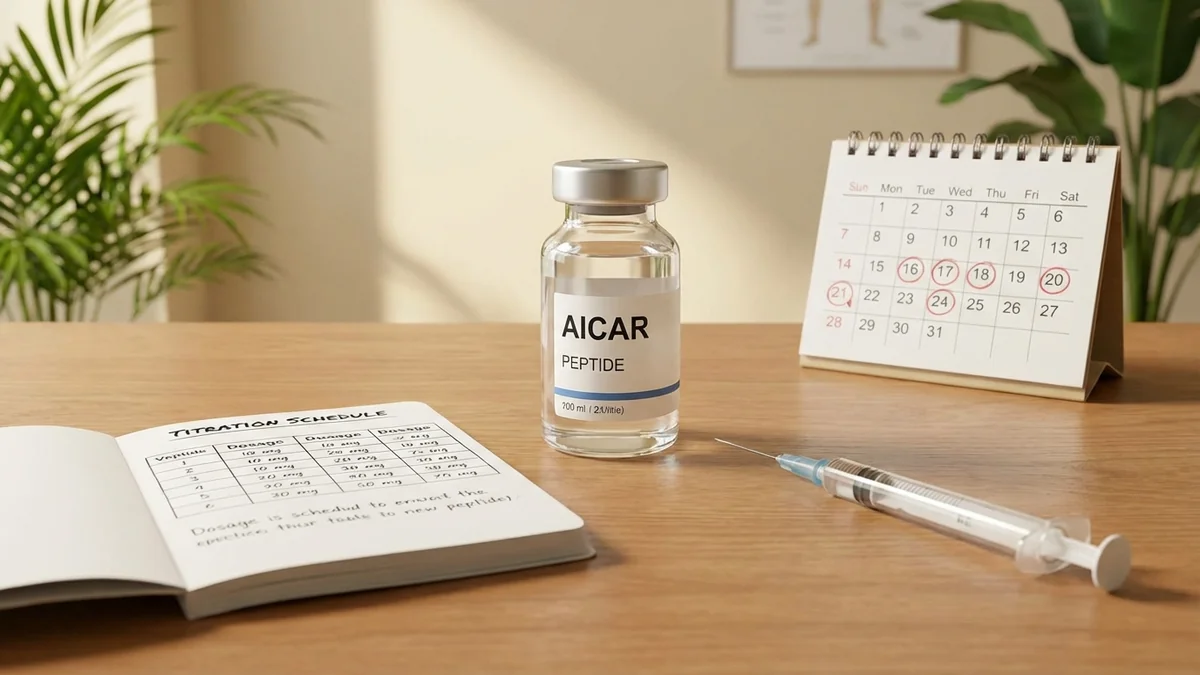
Titration is a critical component of AICAR dosing to enhance tolerability and efficacy. Clinical protocols often begin with lower doses, gradually increasing based on patient response and side effect profile. This approach helps minimize potential adverse effects and allows the body to adjust to the compound's metabolic effects.
Administration Method
AICAR is typically administered via subcutaneous injection. This method requires attention to injection site rotation to prevent tissue damage. Common sites include the abdomen, thigh, and upper arm. A 25-30 gauge needle is typically used, and AICAR should be stored in a cool, dry place, reconstituted as per research protocol guidelines.
Factors That Affect Dosing
Several factors can influence AICAR dosing, including body weight, specific treatment goals, and the presence of other medical conditions. Providers may adjust dosing based on kidney or liver function, as these organs play vital roles in drug metabolism and clearance.
What Happens If You Miss a Dose
In research settings, missing a dose of AICAR should be addressed by consulting the supervising healthcare professional or research coordinator. Generally, the next dose should not be doubled to compensate for a missed one.
Dosing Compared to Similar Peptides
AICAR's dosing and mechanism of action can be compared to other AMPK activators like MOTS-c, which also influences metabolic pathways. However, MOTS-c has a different amino acid sequence and is derived from mitochondrial peptides (PMID 36670507).
What the Evidence Does Not Show
Current research on AICAR is primarily preclinical, with limited human data. The long-term safety and efficacy of AICAR dosing are not well-established, and more research is needed to determine its therapeutic potential and safety profile.
FAQ
Q: Is AICAR safe for human use?
A: AICAR is not FDA-approved for human use and is available only for research purposes.
Q: How is AICAR administered?
A: AICAR is typically administered via subcutaneous injection.
Q: Can AICAR dosing be adjusted?
A: Yes, dosing may be adjusted based on factors like body weight and concurrent medications.
Q: What should I do if I miss a dose?
A: Consult with a healthcare provider or research coordinator for guidance.
Q: Are there any long-term studies on AICAR?
A: Long-term studies on AICAR in humans are limited, and further research is needed.
This content is for informational purposes only and does not constitute medical advice. Consult a licensed healthcare provider before starting any treatment.