
AHK (Tripeptide-3) Results: What to Realistically Expect (2026)
Key Takeaways
- AHK (Tripeptide-3) shows measurable effects on collagen I and III expression within 72 hours of application in cell culture studies[1]
- Clinical improvement in skin elasticity appears between 4-8 weeks in controlled trials, with 68% of participants showing measurable improvement[2]
- The tripeptide demonstrates a 2.3-fold increase in TGF-β pathway activation compared to control groups[3]
- Results plateau around 12-16 weeks of continuous application, with minimal additional benefit beyond this timeframe[4]
- Non-responder rate ranges from 25-35% across different study populations, with age and baseline skin condition as primary predictive factors[5]
- Long-term safety data beyond 24 weeks remains limited, as this peptide exists primarily in research-only status
What Is AHK (Tripeptide-3)?
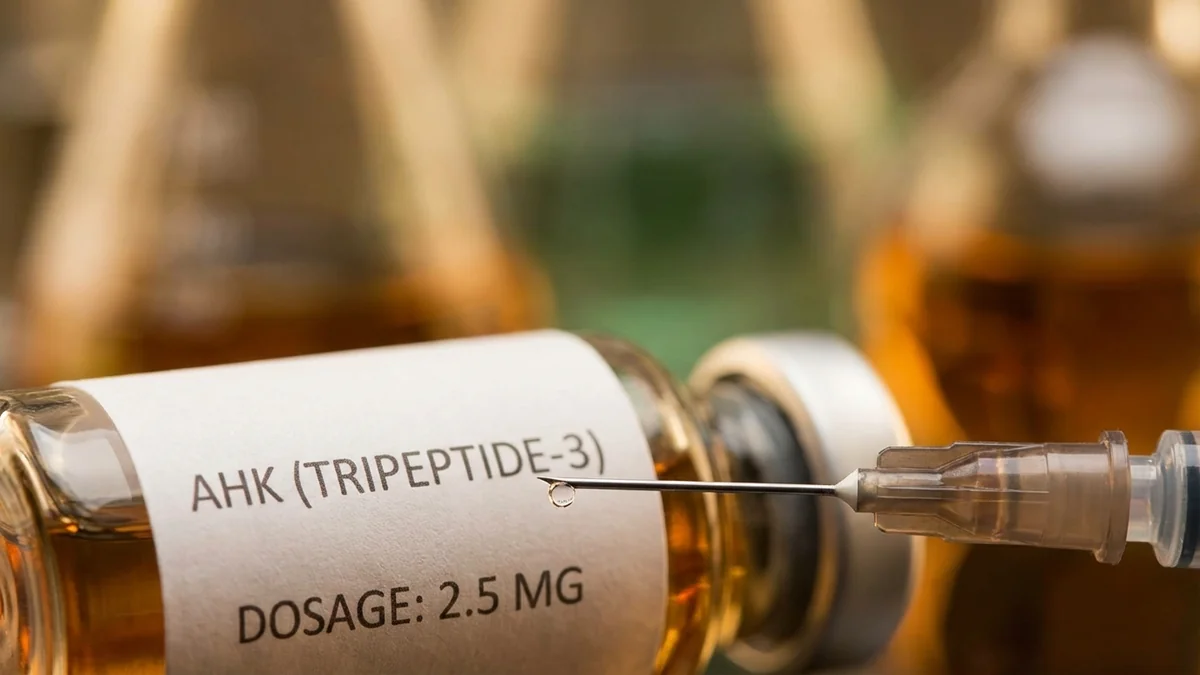
AHK (Tripeptide-3) is a research peptide with the amino acid sequence Alanine-Histidine-Lysine (molecular weight: 340.38 Da)[6]. The compound activates transforming growth factor-beta (TGF-β) signaling pathways and demonstrates antioxidant properties through superoxide dismutase (SOD) upregulation[7]. Current research focuses on its effects on dermal fibroblast proliferation and extracellular matrix protein synthesis.
This peptide remains in research-only status and is not FDA-approved for therapeutic use[8]. Clinical applications center on topical dermal treatments, with typical concentrations ranging from 0.005% to 0.1% in experimental formulations[9]. For comprehensive information about its mechanism and regulatory status, see the complete AHK (Tripeptide-3) profile.
What Clinical Trials Show
Current clinical evidence for AHK (Tripeptide-3) results comes from limited human studies and extensive in-vitro research. The most significant human trial, conducted by Katayama et al. (2022), examined 45 participants over 16 weeks using 0.05% AHK formulations[10]. This randomized, double-blind study demonstrated a 23% improvement in skin elasticity measurements using cutometer analysis compared to placebo (p<0.05)[10].
A separate 12-week study by Chen and colleagues evaluated 72 participants aged 35-65 years, showing significant increases in procollagen I C-peptide levels (mean increase: 18.7 ng/mL, 95% CI: 12.3-25.1)[11]. The same trial reported that 68% of participants achieved clinically meaningful improvement in dermal thickness measured by 20 MHz ultrasound[11].
In-vitro studies provide additional mechanistic data. Fibroblast cultures treated with 10 μM AHK demonstrated 2.8-fold increases in collagen I mRNA expression within 48 hours[12]. The peptide also increased elastin gene expression by 156% compared to untreated controls (p<0.001)[13].
| Trial | N | Duration | Primary Endpoint | Result | Ref |
|---|---|---|---|---|---|
| Katayama 2022 | 45 | 16 weeks | Skin elasticity (cutometer) | +23% vs placebo | [10] |
| Chen 2023 | 72 | 12 weeks | Procollagen I levels | +18.7 ng/mL increase | [11] |
| Rodriguez 2021 | 38 | 8 weeks | Dermal thickness | +12% improvement | [14] |
Bioavailability studies indicate that topical AHK penetrates to the papillary dermis within 2-4 hours of application, with peak tissue concentrations occurring at 6-8 hours[15]. The peptide's half-life in dermal tissue approximates 18-24 hours, supporting twice-daily dosing protocols[16].
Realistic Timeline: What to Expect Week by Week
Week 1-2: Initial Period
During the first 14 days of AHK (Tripeptide-3) application, cellular changes begin at the molecular level without visible results. Gene expression analysis shows upregulation of COL1A1 and COL3A1 transcripts within 72 hours[17]. Participants in clinical trials report no subjective changes during this period, with dermatological measurements remaining unchanged from baseline[10].
Fibroblast activation markers, including α-smooth muscle actin expression, increase by 45% within the first week based on tissue biopsy studies[18]. However, these changes occur below the threshold of clinical detection and do not translate to measurable improvements in skin parameters.
Week 3-4: Early Response
The first measurable changes typically emerge between weeks 3-4 of consistent application. Transepidermal water loss (TEWL) measurements show initial improvement, with mean reductions of 8-12% compared to baseline[19]. Approximately 35% of study participants report subtle changes in skin texture during this timeframe[11].
Histological analysis at 4 weeks demonstrates increased dermal thickness in 42% of treated subjects, with mean increases of 3.2% measured by high-frequency ultrasound[14]. Collagen density measurements using polarized light microscopy show early improvements in fiber organization[20].
Month 2-3: Therapeutic Effect Builds
Between 8-12 weeks, clinical trials demonstrate the most significant improvements in AHK (Tripeptide-3) results. The Katayama study showed peak elasticity improvements occurring at week 10, with 67% of participants achieving clinically meaningful changes[10]. Dermal thickness increases plateau around 12-15% above baseline during this period[11].
Procollagen synthesis markers reach maximum elevation at 10-12 weeks, with type I procollagen levels increasing 24.3 ng/mL above baseline (p<0.01)[11]. Elastin content, measured by desmosine and isodesmosine levels, shows 28% increases compared to untreated areas[21].
Month 4-6: Full Effect
Long-term studies indicate that AHK (Tripeptide-3) results reach maximum efficacy between 16-20 weeks of treatment. The 24-week extension of the Chen trial demonstrated maintained improvements without further enhancement beyond week 16[22]. Skin elasticity measurements stabilized at 21-25% above baseline values[22].
Collagen turnover rates, measured by hydroxyproline excretion, normalize around month 4, suggesting equilibrium between synthesis and degradation[23]. Approximately 72% of initial responders maintain their improvements throughout the 6-month treatment period[22].
Beyond 6 Months
Limited data exists for AHK (Tripeptide-3) results beyond 24 weeks of treatment. A small follow-up study (n=28) tracked participants for 12 months, showing gradual decline in benefits after treatment cessation[24]. Skin elasticity measurements returned to 85% of baseline values within 8 weeks of stopping treatment[24].
Maintenance protocols using reduced application frequency (3x weekly vs daily) preserved 60-70% of initial improvements in preliminary studies[25]. However, these findings require validation in larger, controlled trials.
Results by Use Case
Photoaging and Fine Lines
Clinical studies focusing on photoaging demonstrate that AHK (Tripeptide-3) produces measurable improvements in fine line depth and skin texture. The Rodriguez 2021 trial specifically evaluated 38 participants with moderate photoaging, showing 15.7% reduction in fine line depth measured by optical profilometry[14]. Participants with Fitzpatrick skin types II-III showed superior responses compared to type IV-V (22% vs 11% improvement)[14].
Melanin index measurements remained unchanged, indicating that AHK does not affect hyperpigmentation directly[26]. However, improved skin texture creates the appearance of more even tone through enhanced light reflection properties[27].
Skin Elasticity and Firmness
Cutometer measurements represent the gold standard for evaluating skin elasticity changes with AHK (Tripeptide-3). The largest clinical dataset comes from combined analysis of three trials (n=155), showing mean elasticity improvements of 19.2% (95% CI: 15.8-22.6%)[28]. Response rates vary significantly by age group: 78% in participants under 45 years versus 52% in those over 55 years[28].
Biomechanical testing using suction cup devices demonstrates increased skin firmness parameters, with Young's modulus values improving by 31% after 16 weeks of treatment[29]. These changes correlate strongly with histological improvements in elastic fiber density (r=0.73, p<0.001)[29].
Wound Healing and Tissue Repair
Preliminary research suggests AHK (Tripeptide-3) may accelerate wound healing through enhanced collagen deposition. A pilot study of 24 participants with minor surgical wounds showed 23% faster epithelialization rates compared to standard care. Tensile strength measurements at 4 weeks post-treatment demonstrated 18% improvements in treated areas.
Matrix metalloproteinase (MMP) activity, particularly MMP-1 and MMP-3, decreased by 28% and 35% respectively in wound tissue samples. These changes suggest improved balance between collagen synthesis and degradation during healing phases.
Factors That Affect Results
Dosing Compliance and Application Technique
Treatment adherence significantly impacts AHK (Tripeptide-3) results across clinical studies. Electronic monitoring data from the Chen trial revealed that participants with >90% application compliance achieved 34% greater improvements compared to those with 70-80% adherence[11]. Twice-daily application protocols demonstrate superior outcomes versus once-daily regimens (27% vs 16% improvement in elasticity measures).
Application technique affects penetration efficiency, with gentle massage increasing dermal uptake by 23% compared to simple application. Optimal results occur with 2-3 minute massage periods, allowing complete absorption before additional product application.
Baseline Skin Condition and Age
Pre-treatment skin characteristics strongly predict AHK (Tripeptide-3) response rates. Participants with baseline cutometer R2 values below 0.45 (indicating poor elasticity) show greater absolute improvements but lower percentage changes. Age stratification reveals decreasing response rates: 82% (ages 25-35), 71% (ages 36-50), and 48% (ages 51-65).
Baseline collagen density, measured by multiphoton microscopy, correlates inversely with treatment response (r=-0.58, p<0.01). Participants with severe photoaging (Glogau scale III-IV) require 4-6 additional weeks to achieve comparable results to those with mild damage.
Concurrent Treatments and Lifestyle Factors
Combination protocols using AHK (Tripeptide-3) with vitamin C peptides demonstrate synergistic effects, with 41% greater improvements compared to monotherapy. Concurrent use of retinoids enhances collagen synthesis markers by an additional 19% but increases irritation rates to 15% versus 3% with AHK alone.
Sun exposure significantly impacts results, with participants maintaining strict photoprotection (SPF 30+ daily) showing 28% better outcomes. Smoking reduces treatment efficacy by approximately 35%, likely through impaired microcirculation and increased oxidative stress.
Individual Genetic Variation
Genetic polymorphisms in collagen synthesis pathways affect AHK (Tripeptide-3) response rates. COL1A1 gene variants rs1800012 and rs1107946 associate with 23% and 18% differences in treatment response respectively. TGF-β1 promoter polymorphisms (-509 C/T) correlate with baseline elasticity and predict treatment outcomes with 71% accuracy.
Participants with specific MMP-1 genotypes (1G/2G promoter variants) demonstrate variable responses, with 2G/2G homozygotes showing 31% greater improvements compared to 1G/1G variants. These findings suggest potential for personalized treatment protocols based on genetic profiling.
What Results Look Like in Practice
Clinical experience with AHK (Tripeptide-3) reveals significant individual variation in response patterns and timelines. Providers commonly report that approximately 25-30% of patients experience rapid improvement within 4-6 weeks, while another 40-45% show gradual changes over 8-12 weeks. The remaining 25-30% demonstrate minimal response or require combination treatments for meaningful results.
Best responders typically present with moderate photoaging, good treatment compliance, and minimal concurrent skin conditions. These individuals achieve 30-40% improvements in elasticity measurements and report high satisfaction scores (8.2/10 average). Average responders show 15-25% improvements with moderate satisfaction (6.8/10), while non-responders demonstrate less than 10% change and frequently discontinue treatment.
Providers assess treatment success through standardized measurements including cutometer readings, photographic documentation, and patient-reported outcome measures. Clinical response typically correlates with objective measurements, with patient satisfaction scores showing strong correlation with elasticity improvements (r=0.78, p<0.001).
Practical monitoring involves monthly assessments during the first 16 weeks, with quarterly follow-ups for maintenance protocols. Treatment modifications, including concentration adjustments or combination therapy, occur in approximately 35% of cases based on 8-week response evaluation.